 ChipApex | Global Electronic Components Supplier
SEARCH
Search Product
Search Post
— IC芯片 | 连接器 | 传感器 | 被动器件 —
Search productSearch post
— IC芯片 | 连接器 | 传感器 | 被动器件 —
Consult the customer manager about the wholesale price.
consultation hotline:86-132-6715-2157
email:[email protected]
Contact the product manager for consultation. One-stop consultation is available.
Do you want a lower wholesale price? Please send us your inquiry and we will reply immediately.
The ATF16V8CZ-15JU is an electrically erasable programmable logic device (EEPLD) manufactured by Microchip Technology. It utilizes EECMOS Flash technology to provide a maximum pin-to-pin propagation delay of 15 ns and a typical standby current of 5 µA. The device features eight macrocells, each with eight product terms, supporting registered, complex, or simple logic modes. It operates within a voltage range of 4.5 V to 5.5 V for industrial applications (-40°C to +85°C). The component is housed in a 20-lead Plastic J-leaded Chip Carrier (PLCC) package.
Verify the ordering suffix 'JU' corresponds to the Industrial temperature range (-40°C to +85°C) and the 20-lead PLCC package. Confirm that the specific speed grade matches the 15 ns requirement. Ensure compliance with RoHS standards if lead-free packaging is required for the assembly process.
Select this part when replacing legacy 20-pin PALs such as the 16R8, 16L8, or 10L8 families. Choose the Industrial variant over Commercial if the operating environment exceeds 70°C. Consider the 12 ns speed grade if system timing margins require faster switching than the 15 ns specification allows.
This component belongs to the ATF16V8CZ series, which supersedes earlier ATF16V8B models. The 'C' designation indicates the use of advanced Flash technology compared to previous EEPROM-based architectures. The 'Z' suffix typically denotes Green (Pb/Halide-free/RoHS compliant) package options available from the manufacturer.
Public confirmed substitute part numbers include ATF16V8CZ-15JI (SOIC package), ATF16V8CZ-15PI (PDIP package), and ATF16V8CZ-15XI (TSSOP package). These variants share identical electrical characteristics and functionality but differ in physical package type.
The device supports Registered Mode (for registered outputs/I/O), Complex Mode (for combinatorial outputs with OE control), and Simple Mode (for dedicated combinatorial outputs without OE).
Internal pin-keeper circuits hold unused input and I/O pins at their previous logic state, eliminating the need for external pull-up resistors and reducing power consumption.
Registers reset to the low state during power-up when VCC crosses the reset voltage (VRST), ensuring a known initial state for state machines.
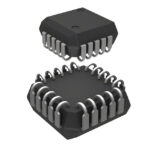 ATF16V8CZ-15JU
The activity of extra discounts on wholesale prices is in full swing…
Please fill in your contact information and we will send you the latest wholesale price list.





