 ChipApex | Global Electronic Components Supplier
SEARCH
Search Product
Search Post
— IC芯片 | 连接器 | 传感器 | 被动器件 —
Search productSearch post
— IC芯片 | 连接器 | 传感器 | 被动器件 —
Consult the customer manager about the wholesale price.
consultation hotline:86-132-6715-2157
email:[email protected]
Contact the product manager for consultation. One-stop consultation is available.
Do you want a lower wholesale price? Please send us your inquiry and we will reply immediately.
The ATF20V8BQL-15XC is a high-performance Electrically Erasable Programmable Logic Device (EEPLD) manufactured by Microchip Technology. It features an industry-standard architecture that emulates many 24-pin PALs, providing eight macrocells with dedicated product terms. The device utilizes advanced Flash technology for reprogrammability and offers low power consumption options, with a standby current of 5 mA and active current of 20 mA. It supports commercial temperature ranges (0°C to 70°C) and operates at a maximum propagation delay of 15 ns. The component includes CMOS and TTL compatible inputs/outputs, internal pull-up resistors, and robust ESD protection.
Verify the package type corresponding to the 'XC' suffix against the official ordering information table. Confirm that the required operating temperature range matches the Commercial specification (0°C to 70°C), as Industrial versions utilize different suffixes. Ensure programming hardware supports the specific Flash memory architecture for reliable erasing and writing cycles.
Select this variant when low power dissipation is critical, specifically noting the 5 mA standby current characteristic of the BQL series compared to higher current alternatives. Choose based on the required speed grade; the -15 designation indicates a maximum pin-to-pin delay of 15 ns. Consider the available package options such as TSSOP or SOIC if surface mount installation is preferred over through-hole technologies.
This component belongs to the ATF20V8B family of EEPLDs, which are designed to provide a superset of generic architectures found in standard PAL devices. The family includes variations like ATF20V8B and ATF20V8BQ, differentiated primarily by power consumption levels and package availability. The ATF20V8BQL specifically targets applications requiring reduced power usage while maintaining high-speed performance capabilities.
The device can directly replace 20R8, 20RP8, 20R6, 20RP6, 20R4, and 20RP4 devices when configured in Registered Mode. It also serves as a substitute for various 24-pin combinatorial PLDs in Complex and Simple modes. Users should verify that the target application's timing requirements are met by the 15 ns propagation delay specification.
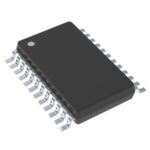 ATF20V8BQL-15XC
The activity of extra discounts on wholesale prices is in full swing…
Please fill in your contact information and we will send you the latest wholesale price list.





