 ChipApex | Global Electronic Components Supplier
SEARCH
Search Product
Search Post
— IC芯片 | 连接器 | 传感器 | 被动器件 —
Search productSearch post
— IC芯片 | 连接器 | 传感器 | 被动器件 —
Consult the customer manager about the wholesale price.
consultation hotline:86-132-6715-2157
email:[email protected]
Contact the product manager for consultation. One-stop consultation is available.
Do you want a lower wholesale price? Please send us your inquiry and we will reply immediately.
The ATF22LV10C-10SI is an industrial-grade, low-voltage Electrically Erasable Programmable Logic Device (EEPLD) manufactured by Microchip Technology. It features a maximum propagation delay of 10 ns and operates within a supply voltage range of 3.0V to 5.5V. The device utilizes a variable product term architecture with ten macrocells, providing 8 to 16 product terms per output for complex logic implementation. It includes synchronous and asynchronous reset capabilities, register preload functionality, and a user-controlled power-down pin option that reduces standby current to approximately 10 µA. The component is housed in a 24-lead Plastic Gull Wing Small Outline (SOIC) package.
Verify the specific ordering suffix 'SI' corresponds to the 24-lead SOIC package and Industrial temperature range (-40°C to +85°C). Confirm RoHS compliance status if lead-free packaging is required for the design. Ensure programming equipment supports the JEDEC file format generated for the Power-down Mode compiler settings if the PD pin feature is utilized in the circuit design.
Select this model when a 10 ns speed grade is required alongside low-power standby capabilities in an industrial environment. The SOIC package is suitable for surface-mount assembly. Consider the ATF22LV10CQZ variant if edge-sensing zero standby power (3 µA typical) is preferred over the standard pin-controlled power-down feature found in this part number.
This component belongs to the Atmel ATF22LV10C family of advanced low-voltage EEPLDs. It is designed to emulate standard 24-pin PAL devices while offering reprogrammability via Flash memory technology. The device integrates a security fuse to prevent unauthorized copying of programmed fuse patterns and provides 64 bits of accessible user signature memory.
The ATF22LV10C-10PC serves as a direct replacement for the same speed grade and package type but is rated for Commercial temperature range (0°C to 70°C) instead of Industrial.
When the power-down pin is active, all input signals except the power-down pin are blocked. However, internal input and I/O hold latches remain active to ensure pins do not float to indeterminate levels, maintaining their previous logic states.
Register preload allows each register to be loaded with either a high or low state during programming. This simplifies testing by enabling any state to be forced into the registers to control test sequencing automatically after download.
No. Unused product terms are automatically disabled by the compiler to decrease power consumption, ensuring efficient energy usage even when not all logic resources are utilized.
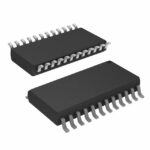 ATF22LV10C-10SI
The activity of extra discounts on wholesale prices is in full swing…
Please fill in your contact information and we will send you the latest wholesale price list.





