 ChipApex | Global Electronic Components Supplier
SEARCH
Search Product
Search Post
— IC芯片 | 连接器 | 传感器 | 被动器件 —
Search productSearch post
— IC芯片 | 连接器 | 传感器 | 被动器件 —
Consult the customer manager about the wholesale price.
consultation hotline:86-132-6715-2157
email:[email protected]
Contact the product manager for consultation. One-stop consultation is available.
Do you want a lower wholesale price? Please send us your inquiry and we will reply immediately.
The ATF22LV10C-15JI is a high-performance Electrically Erasable Programmable Logic Device (EEPLD) manufactured by Microchip Technology. It features 12 dedicated inputs and 10 I/O macrocells within a 24-lead Plastic Dual In-line Package (PDIP). The device operates on a 3.0V to 5.5V supply voltage with a maximum propagation delay of 15ns. It utilizes advanced Flash memory technology, offering reprogrammability, 20-year data retention, and 100 erase/write cycles. Key electrical characteristics include a typical standby power consumption of 10µA in power-down mode and industrial temperature range operation from -40°C to +85°C.
Verify package type compatibility as the 'J' suffix denotes a 28-lead PLCC package in standard ordering codes, while 'I' indicates Industrial temperature range. Confirm RoHS compliance status if lead-free components are required, noting that lead-based packages are becoming obsolete. Ensure design files account for the specific compiler mode if utilizing the power-down feature.
Select the ATF22LV10C-15JI for applications requiring low-power standby modes and industrial temperature stability (-40°C to +85°C). The 15ns speed grade offers a balance between performance and power dissipation. Ensure the design utilizes the PD pin configuration if zero-power standby is critical, as this disables one logic array input. Verify that the 24-pin DIP footprint matches the PCB layout requirements.
This component belongs to the Atmel ATF22LV10C family of high-performance EEPLDs. It is part of the broader ATF22V10 series, distinguished by its low-voltage operation (3.0V minimum) compared to standard 5V-only devices. The device serves as a drop-in replacement for many legacy PAL devices due to its universal architecture and standard pinouts.
Direct substitutes include other ATF22LV10C variants with different speed grades or packages, such as ATF22LV10C-10JI for faster switching. For non-low-voltage applications, the ATF22V10B series may be considered, though voltage tolerances differ. Always verify pinout compatibility and programming tool support before substitution.
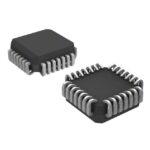 ATF22LV10C-15JI
The activity of extra discounts on wholesale prices is in full swing…
Please fill in your contact information and we will send you the latest wholesale price list.





