 ChipApex | Global Electronic Components Supplier
SEARCH
Search Product
Search Post
— IC芯片 | 连接器 | 传感器 | 被动器件 —
Search productSearch post
— IC芯片 | 连接器 | 传感器 | 被动器件 —
Consult the customer manager about the wholesale price.
consultation hotline:86-132-6715-2157
email:[email protected]
Contact the product manager for consultation. One-stop consultation is available.
Do you want a lower wholesale price? Please send us your inquiry and we will reply immediately.
The ATF22V10C-15JC is a high-performance Electrically Erasable Programmable Logic Device (EEPLD) manufactured by Microchip Technology, utilizing Atmel Flash memory technology. It features 10 macrocells and 10 I/O pins within a 28-lead Plastic J-leaded Chip Carrier (PLCC) package. The device specifies a maximum pin-to-pin propagation delay of 15 ns and a clock-to-output delay of 8.0 ns. Operating at a standard 5V supply, it supports industrial temperature ranges from -40°C to +85°C. Key electrical characteristics include a typical standby power consumption of 35 µA and a maximum operating frequency of 55.5 MHz with external feedback.
Verify the specific ordering suffix against the manufacturer's official documentation to confirm package type and temperature range. The 'JC' designation typically corresponds to the PLCC package and Industrial temperature grade, but cross-reference with the latest datasheet revision history to ensure compliance with current manufacturing specifications and environmental directives.
Select this component for designs requiring reprogrammability and low standby power in an industrial environment. Ensure the design tool compiler mode matches the required features; use the Power-down Mode compiler option if the PD pin functionality is utilized. Verify that the 15 ns speed grade meets the system timing requirements, noting that DIP packages may have slightly different delay characteristics.
This part belongs to the ATF22V10C series, which is backward-compatible with the Atmel ATF22V10B(Q) and AT22V10(L) families. It represents a high-performance CMOS PLD variant offering improved speed and lower power dissipation compared to earlier generations, suitable for replacing legacy GAL or PAL devices in modern 5V logic applications.
Publicly confirmed substitute part numbers are not explicitly listed in the provided source material. Designers should verify compatibility with ATF22V10B or AT22V10 variants based on pinout and speed grade requirements, ensuring compiler settings align with the target device's fuse map.
When the PD pin is driven high, the device enters power-down mode, reducing supply current to less than 100 µA. All output data and internal logic states are latched and held, and input signals except the PD pin are blocked.
The internal pin-keeper circuits hold each pin at its previous logic state when not driven externally. This prevents floating inputs, ensures valid logic levels, and reduces system power by eliminating the need for pull-up resistors.
Yes, the ATF22V10C registers support synchronous preset. A JEDEC file generated with preload vectors allows any state to be forced into the registers automatically after programming, simplifying test sequencing.
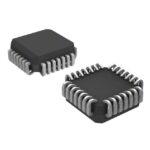 ATF22V10C-15JC
The activity of extra discounts on wholesale prices is in full swing…
Please fill in your contact information and we will send you the latest wholesale price list.






