 ChipApex | Global Electronic Components Supplier
SEARCH
Search Product
Search Post
— IC芯片 | 连接器 | 传感器 | 被动器件 —
Search productSearch post
— IC芯片 | 连接器 | 传感器 | 被动器件 —
Consult the customer manager about the wholesale price.
consultation hotline:86-132-6715-2157
email:[email protected]
Contact the product manager for consultation. One-stop consultation is available.
Do you want a lower wholesale price? Please send us your inquiry and we will reply immediately.
The ATF22V10CQ-15JC is a high-performance Electrically Erasable Programmable Logic Device (EEPLD) manufactured by Microchip Technology. It features 10 macrocells and supports up to 22 inputs and 10 bidirectional I/Os within a 28-lead Plastic J-leaded Chip Carrier (PLCC) package. The device operates at a maximum propagation delay of 15 ns, with a clock-to-output delay of 8 ns. It functions on a 5V supply voltage, drawing a typical standby current of 35 mA and a maximum of 70 mA in industrial temperature ranges (-40°C to +85°C). Key specifications include 100% tested Flash memory technology, 20-year data retention, and 100 erase/write cycles.
Verify the specific ordering suffix 'JC' against official Microchip documentation, as standard datasheets list 'JU' for PLCC packages. Confirm RoHS compliance status, as green package options are available but may require specific suffixes. Ensure programming hardware supports the JEDEC file format generated by Synario or WINCUPL compilers for this device family.
Select the ATF22V10CQ-15JC for applications requiring industrial temperature operation (-40°C to +85°C) and low-power standby capabilities. The 'CQ' designation indicates support for the pin-controlled power-down feature. Compare against the commercial grade ATF22V10C-15JU if operating temperatures remain within 0°C to 70°C. Ensure the design utilizes the PD pin configuration correctly to enable power-down modes via the compiler.
This component belongs to the ATF22V10C series of high-performance EEPLDs. It utilizes proven electrically erasable Flash memory technology, offering significant speed improvements over previous generations like the ATF22V10B. The series is designed to replace complex discrete logic gates, reducing board space and power consumption in digital systems.
The ATF22V10CQ-15JC is backward-compatible with the Atmel ATF22V10B(Q) and AT22V10(L) devices. Designers migrating from these older families should verify that the logic design files are compatible with the C-series compiler modes and that pin assignments remain consistent across the package types.
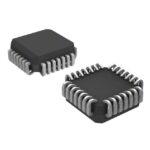 ATF22V10CQ-15JC
The activity of extra discounts on wholesale prices is in full swing…
Please fill in your contact information and we will send you the latest wholesale price list.





