 ChipApex | Global Electronic Components Supplier
SEARCH
Search Product
Search Post
— IC芯片 | 连接器 | 传感器 | 被动器件 —
Search productSearch post
— IC芯片 | 连接器 | 传感器 | 被动器件 —
Consult the customer manager about the wholesale price.
consultation hotline:86-132-6715-2157
email:[email protected]
Contact the product manager for consultation. One-stop consultation is available.
Do you want a lower wholesale price? Please send us your inquiry and we will reply immediately.
The ATF22V10CZ-15PC is an electrically erasable programmable logic device (EEPLD) manufactured by Microchip Technology, formerly Atmel. It features a high-performance CMOS architecture with 12 inputs and 10 I/O macrocells. The maximum pin-to-pin propagation delay is 15 ns, supporting a maximum operating frequency of 83.3 MHz. It operates at a supply voltage of 5 V ±10% within the industrial temperature range of -40°C to +85°C. The device utilizes Flash memory technology for reprogrammability and offers zero standby power dissipation through Input Transition Detection circuitry.
Verify that the component matches the specific package type indicated by the ordering suffix. Confirm the operational temperature range requirements against the datasheet specifications for commercial versus industrial grades. Ensure programming equipment supports the required voltage levels for the EEPLD architecture.
Select this part for applications requiring low-power operation with zero standby current when idle. The 15 ns speed grade is suitable for systems operating up to 83.3 MHz. Consider the ATF22V10CQZ series as the recommended successor, as the ATF22V10CZ line is obsolete and not recommended for new designs.
This component belongs to the ATF22V10C(Q)Z family of high-performance EEPLDs. The 'Z' suffix denotes the inclusion of the zero-power feature set. The 'PC' in the model number specifies the 24-pin Plastic Dual Inline Package (PDIP) variant. This device serves as a superset of the generic 22V10 architecture.
The ATF22V10CZ series is obsolete and replaced by the ATF22V10CQZ series. For equivalent performance in industrial applications, consider the ATF22V10CQZ-20PI or ATF22V10CQZ-20PU.
The device uses patented Input Transition Detection (ITD) circuitry to automatically power down to zero power mode when the device is idle.
The maximum operating frequency is 83.3 MHz, determined by the 15 ns propagation delay.
Yes, a single security fuse can be programmed to prevent unauthorized copying of the fuse patterns, though the 64-bit User Signature remains accessible.
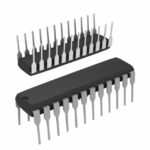 ATF22V10CZ-15PC
The activity of extra discounts on wholesale prices is in full swing…
Please fill in your contact information and we will send you the latest wholesale price list.





