 ChipApex | Global Electronic Components Supplier
SEARCH
Search Product
Search Post
— IC芯片 | 连接器 | 传感器 | 被动器件 —
Search productSearch post
— IC芯片 | 连接器 | 传感器 | 被动器件 —
Consult the customer manager about the wholesale price.
consultation hotline:86-132-6715-2157
email:[email protected]
Contact the product manager for consultation. One-stop consultation is available.
Do you want a lower wholesale price? Please send us your inquiry and we will reply immediately.
The ATL432LIBQDBZRQ1 is an automotive-grade, high-bandwidth, low-quiescent current programmable shunt regulator manufactured by Texas Instruments. It operates within a temperature range of -40°C to +125°C and utilizes a 3-pin SOT-23 package. The device features AEC-Q100 qualification for automotive applications. Its adjustable output voltage ranges from approximately 2.5V to 36V, determined by external resistors. The component offers low initial accuracy tolerance and stable performance across varying thermal conditions, suitable for precision reference and regulation tasks in demanding environments.
Verify the complete part number including suffixes to ensure correct package, temperature grade, and tape/reel configuration. Confirm AEC-Q100 compliance requirements match specific vehicle standards. Check for recent production changes or obsolescence notices directly from Texas Instruments documentation before finalizing procurement specifications.
Select this component when automotive certification and high-speed regulation are required. Compare bandwidth and quiescent current specifications against standard TL432 variants if cost sensitivity outweighs performance needs. Ensure the SOT-23 package fits the PCB layout constraints. Validate that the input voltage range exceeds the maximum expected circuit potential.
This device belongs to the ATL43x family of programmable shunt regulators designed specifically for automotive electronics. It shares functional similarities with the commercial TL432 series but includes enhanced testing and reliability qualifications required for automotive use. The family provides a compact solution for voltage referencing and regulation in space-constrained automotive modules.
The TL432LIBQDBZRQ1 serves as a direct automotive-compatible alternative to non-automotive TL432 variants where qualification is mandatory. Verify pinout compatibility with existing designs using the DBZR package. Cross-reference with ATL431 series only if lower voltage operation suffices.
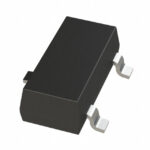 ATL432LIBQDBZRQ1
The activity of extra discounts on wholesale prices is in full swing…
Please fill in your contact information and we will send you the latest wholesale price list.





