 ChipApex | Global Electronic Components Supplier

SEARCH
Search Product
Search Post
Search productSearch post
Consult the customer manager about the wholesale price.
consultation hotline:86-132-6715-2157
email:[email protected]
Contact the product manager for consultation. One-stop consultation is available.
Do you want a lower wholesale price? Please send us your inquiry and we will reply immediately.
ATMEGA16-16MUR is listed in the Microcontrollers range at ChipApex. The manufacturer field lists Microchip Technology. Its product description is IC MCU 8BIT 16KB FLASH 44VQFN. Review the specifications below when checking this part for your BOM.
The ATMEGA16-16MUR is an 8-bit AVR microcontroller featuring a 16 MHz speed grade and operating voltage range of 4.5V to 5.5V. It integrates 16 Kbytes of In-System Programmable Flash, 512 bytes EEPROM, and 1 Kbyte SRAM. The device utilizes a 44-pad QFN/MLF package and supports industrial temperature ranges from -40°C to +85°C.
Verify that the ordering code matches the specific speed grade and package variant required for the design. Confirm the voltage supply constraints align with the 4.5V minimum requirement for this speed grade. Ensure the manufacturing revision meets project specifications regarding errata workarounds.
Select this component when a 44-pad QFN or MLF package is necessary for space-constrained designs. Choose this model over PDIP or TQFP variants if surface mount technology compatibility is required. Verify that the 4.5V to 5.5V operating voltage range suits the system power supply.
This part belongs to the ATmega16 family of high-performance, low-power 8-bit CMOS microcontrollers. It shares core architectural features with other speed grades and packages in the series, differing primarily in maximum clock frequency and physical packaging dimensions.
ATMEGA16-16MU
Explore related parts through Embedded, Integrated Circuits (ICs), all product categories, ChipApex homepage.
Microchip Technology ATMEGA16-16MUR is typically reviewed in Microcontrollers category in embedded designs where boot behavior, debug access, and peripheral assumptions have to remain stable across layout and firmware revisions. Key specs include Description (IC MCU 8BIT 16KB FLASH 44VQFN), Core (AVR), Speed (16MHz), Flash (16KB (8K x 16)), and RAM (1K x 8). In practice, the release review usually stays anchored on i/o (32).
What are common selection points for a microcontroller like ATMEGA16-16MUR?
Check flash/RAM headroom, peripheral set, connectivity options, package constraints, and availability for your production horizon.
Which EEPROM Size is specified for ATMEGA16-16MUR?
512 x 8
Can you confirm the Speed for ATMEGA16-16MUR?
16MHz
Which Supplier Device Package is listed for ATMEGA16-16MUR?
44-VQFN (7x7)
Microchip Technology ATMEGA16-16MUR in the Microcontrollers category is usually shortlisted only after engineers lock the released interface, margin, and field condition that will decide acceptance on assembled hardware. Once the part is on the shipped assembly, the first review usually comes back to core (AVR), speed (16MHz), and flash (16KB (8K x 16)). Selection is driven by compute headroom, peripheral mix, toolchain maturity, lifecycle availability, and secure boot/update strategy. They commonly sit at the center of sensor fusion, protocol processing, or deterministic control loops where latency and reliability matter. Compute control paths are usually judged by boot sequencing, debug access, and domain interaction because many field failures begin as recoverability problems rather than as outright functional failures. They are often commonly used where reset order, boot media, and interface defaults must stay deterministic after power variation and production spread are introduced.
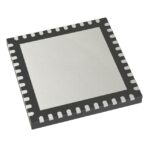 ATMEGA16-16MUR

The activity of extra discounts on wholesale prices is in full swing…
Please fill in your contact information and we will send you the latest wholesale price list.





