 ChipApex | Global Electronic Components Supplier

SEARCH
Search Product
Search Post
Search productSearch post
Consult the customer manager about the wholesale price.
consultation hotline:86-132-6715-2157
email:[email protected]
Contact the product manager for consultation. One-stop consultation is available.
Do you want a lower wholesale price? Please send us your inquiry and we will reply immediately.
ATMEGA16-16PC is listed in the Microcontrollers range at ChipApex. The manufacturer field lists Microchip Technology. Its product description is IC MCU 8BIT 16KB FLASH 40DIP. Review the specifications below when checking this part for your BOM.
The ATMEGA16-16PC is an 8-bit AVR microcontroller manufactured by Microchip Technology. It features a 40-pin PDIP package and operates at speeds up to 16 MHz with a supply voltage range of 4.5V to 5.5V. The device includes 16 Kbytes of In-System Programmable Flash, 512 bytes EEPROM, and 1 Kbyte SRAM. It provides 32 programmable I/O lines and integrates peripherals such as an 8-channel 10-bit ADC, three Timer/Counters, USART, SPI, and a Two-wire Serial Interface.
Verify that the specific ordering code matches the required speed grade and package type. Confirm the operating voltage range aligns with system requirements, noting the distinction between standard and low-voltage variants. Ensure compatibility with existing PCB footprints for the 40-pin PDIP configuration during procurement planning.
Select this component when a 40-pin through-hole package is necessary for prototyping or specific mechanical constraints. Choose this variant over surface-mount options if manual assembly or rework capabilities are prioritized. Consider the 16 MHz speed grade for applications requiring higher processing throughput within the specified voltage limits.
This part belongs to the ATmega16 family of 8-bit microcontrollers based on the AVR enhanced RISC architecture. It shares core specifications with other variants in the series but differs primarily in packaging and speed grades. The family is designed to provide cost-effective solutions for embedded control applications with flexible memory and peripheral configurations.
Consult official documentation for direct pin-compatible substitutes within the same package style. Verify equivalent memory sizes and peripheral availability when selecting alternative parts from the same manufacturer or compatible third-party sources.
Explore related parts through Embedded, Integrated Circuits (ICs), all product categories, ChipApex homepage.
Microchip Technology ATMEGA16-16PC is usually screened in Microcontrollers category when power sequencing, recovery behavior, and I/O planning need a released validation path instead of ad hoc bring-up fixes. Key specs include Description (IC MCU 8BIT 16KB FLASH 40DIP), Core (AVR), Speed (16MHz), Flash (16KB (8K x 16)), and RAM (1K x 8). On the assembled product, teams usually come back to i/o (32) before they treat the part as approved.
Can you confirm the RAM Size for ATMEGA16-16PC?
1K x 8
What supply voltage does ATMEGA16-16PC require?
4.5V ~ 5.5V
Can you confirm the Oscillator Type for ATMEGA16-16PC?
Internal
What is the Supplier Device Package of ATMEGA16-16PC?
40-PDIP
In the Microcontrollers category, Microchip Technology ATMEGA16-16PC is usually evaluated by whether it holds the same electrical, thermal, and mechanical assumptions once the part is on the assembled system. On released hardware, teams usually recheck core (AVR), speed (16MHz), and flash (16KB (8K x 16)) first. Selection is driven by compute headroom, peripheral mix, toolchain maturity, lifecycle availability, and secure boot/update strategy. They often sit at the center of sensor fusion, protocol processing, or deterministic control loops where latency and reliability matter. In IoT deployments, low power and secure boot support long-life outdoor operation. In IoT devices, secure boot and low-power modes enable years-long deployments in outdoor enclosures exposed to humidity and temperature swings. In medical devices, deterministic processing and audit logging support regulated workflows and long-term maintainability. Once the boundaries are defined, it becomes easier to judge fit in the target application and test it on real hardware.
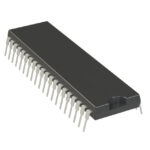 ATMEGA16-16PC

The activity of extra discounts on wholesale prices is in full swing…
Please fill in your contact information and we will send you the latest wholesale price list.





