 ChipApex | Global Electronic Components Supplier

SEARCH
Search Product
Search Post
Search productSearch post
Consult the customer manager about the wholesale price.
consultation hotline:86-132-6715-2157
email:[email protected]
Contact the product manager for consultation. One-stop consultation is available.
Do you want a lower wholesale price? Please send us your inquiry and we will reply immediately.
ATMEGA1608-MFR is listed in the Microcontrollers range at ChipApex. The manufacturer field lists Microchip Technology. Its product description is IC MCU 8BIT 16KB FLASH 32VQFN. Review the specifications below when checking this part for your BOM.
The ATMEGA1608-MFR is an 8-bit AVR microcontroller from the megaAVR 0-series, featuring a hardware multiplier and operation up to 20 MHz. It includes 16 KB of in-system programmable Flash, 2 KB of SRAM, and 256 bytes of EEPROM. The device utilizes a 32-pin VQFN package and supports extended temperature ranges from -40°C to +125°C.
Verify the specific ordering suffix against official Microchip documentation to confirm package type and temperature range. Ensure compatibility with existing design constraints regarding the 32-pin VQFN footprint and UPDI interface requirements before finalizing procurement.
Select this component for designs necessitating extended industrial temperature performance alongside standard megaAVR 0-series features. Consider the 32-pin form factor and memory capacity relative to application complexity and available I/O resources.
This part belongs to the megaAVR 0-series family, which offers vertical migration without code modification across varying pin counts and memory sizes. It shares architectural similarities with other devices in the series while providing specific memory and package configurations.
ATmega1608-MAU
The device operates at a maximum frequency of 20 MHz.
Yes, it features 16 KB of in-system self-programmable Flash memory.
Explore related parts through Embedded, Integrated Circuits (ICs), all product categories, ChipApex homepage.
Microchip Technology ATMEGA1608-MFR is usually screened in Microcontrollers category when power sequencing, recovery behavior, and I/O planning need a released validation path instead of ad hoc bring-up fixes. Key specs include Description (IC MCU 8BIT 16KB FLASH 32VQFN), Core (AVR), Speed (20MHz), Flash (16KB (16K x 8)), and RAM (2K x 8). The strongest approval record usually starts with i/o (27) and then checks whether those limits still hold after assembly.
What details help you quote ATMEGA1608-MFR quickly?
Share the part number (ATMEGA1608-MFR), quantity, target delivery date, and any packaging or documentation requirements.
Which operating temperature range is specified for ATMEGA1608-MFR?
-40°C ~ 125°C
Which Connectivity is specified for ATMEGA1608-MFR?
I2C, SPI, UART/USART
What is the flash/program memory size of ATMEGA1608-MFR?
16KB (16K x 8)
For Microchip Technology ATMEGA1608-MFR used in Microcontrollers designs, engineers usually narrow the choice by checking which failure modes stay visible and measurable after layout, wiring, and enclosure effects are added. In production, the early application review usually stays on core (AVR), speed (20MHz), and flash (16KB (16K x 8)). Microcontrollers are usually released only after boot straps, reset timing, debug access, and power-domain behavior are checked on assembled hardware, because many field faults begin as recovery problems rather than obvious functional misses. Well-matched compute devices reduce software complexity by providing the right hardware acceleration and I/O integration. They execute firmware or algorithms and coordinate peripherals, communications, and security features that define product capabilities. As a result, qualification is easier to repeat and less sensitive to lot-to-lot variation or fixture drift.
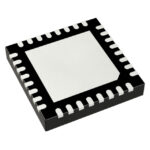 ATMEGA1608-MFR

The activity of extra discounts on wholesale prices is in full swing…
Please fill in your contact information and we will send you the latest wholesale price list.







