 ChipApex | Global Electronic Components Supplier

SEARCH
Search Product
Search Post
Search productSearch post
Consult the customer manager about the wholesale price.
consultation hotline:86-132-6715-2157
email:[email protected]
Contact the product manager for consultation. One-stop consultation is available.
Do you want a lower wholesale price? Please send us your inquiry and we will reply immediately.
ATMEGA1608-XU is listed in the Microcontrollers range at ChipApex. The manufacturer field lists Microchip Technology. Its product description is IC MCU 8BIT 16KB FLASH 28SSOP. Review the specifications below when checking this part for your BOM.
The ATmega1608-XU is an 8-bit AVR microcontroller from the megaAVR 0-series, featuring a hardware multiplier and operation up to 20 MHz. It includes 16 KB of in-system programmable Flash, 2 KB of SRAM, and 256 bytes of EEPROM. The device utilizes a 32-pin SSOP package and supports industrial temperature ranges from -40°C to +85°C. Key peripherals include one 16-bit Timer/Counter Type A (TCA), three 16-bit Timer/Counters Type B (TCB), a Real-Time Counter (RTC), three USARTs, one SPI, and one TWI interface.
Verify the specific ordering suffix against the manufacturer's current datasheet revision to confirm package type and temperature grade. Ensure compatibility with existing UPDI debuggers and verify that the selected variant meets the required voltage and frequency specifications for the target application environment.
Select this component when pin count and memory size align with the megaAVR 0-series architecture requirements. Consider vertical migration within the series for code reuse. Evaluate the need for specific peripheral counts, such as the number of available timers or communication interfaces, to ensure the 32-pin configuration suffices for the design.
This part belongs to the megaAVR 0-series family, designed for flexible and low-power applications. It shares architectural similarities with the ATmega808 and ATmega1609, differing primarily in memory capacity and pin count. The series emphasizes vertical migration without code modification, allowing designers to scale features while maintaining software compatibility across different package options.
Direct replacements within the same package and feature set include the ATmega1609-XU. For pin-compatible alternatives with different memory sizes, consider the ATmega808-XU or ATmega3208-XU. Verify that any substitute maintains the required industrial temperature range and SSOP package dimensions.
The device operates at a maximum frequency of 20 MHz.
The ATmega1608 provides 27 general-purpose I/O lines.
Yes, the TWI interface can operate simultaneously as a host and a client on different pins.
Explore related parts through Embedded, Integrated Circuits (ICs), all product categories, ChipApex homepage.
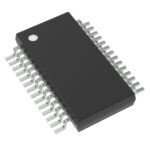 ATMEGA1608-XU

The activity of extra discounts on wholesale prices is in full swing…
Please fill in your contact information and we will send you the latest wholesale price list.






