 ChipApex | Global Electronic Components Supplier

SEARCH
Search Product
Search Post
Search productSearch post
Consult the customer manager about the wholesale price.
consultation hotline:86-132-6715-2157
email:[email protected]
Contact the product manager for consultation. One-stop consultation is available.
Do you want a lower wholesale price? Please send us your inquiry and we will reply immediately.
ATMEGA1609-AUR is listed in the Microcontrollers range at ChipApex. The manufacturer field lists Microchip Technology. Its product description is IC MCU 8BIT 16KB FLASH 48TQFP. Review the specifications below when checking this part for your BOM.
The ATMEGA1609-AUR is an 8-bit microcontroller from the megaAVR 0-series by Microchip Technology. It features a 16 KB In-system self-programmable Flash memory, 2 KB SRAM, and 256 bytes of EEPROM. The device operates at a maximum frequency of 20 MHz and includes a hardware multiplier. It utilizes a single-pin Unified Program Debug Interface (UPDI) for programming and debugging. The component supports industrial temperature ranges and offers advanced peripherals including multiple USARTs, SPI, TWI, and an Event System.
Verify the specific ordering suffix 'AUR' corresponds to the Tape & Reel carrier type as defined in the datasheet nomenclature. Confirm that the 'U' suffix indicates the Industrial temperature range (-40°C to +85°C). Ensure the procurement matches the exact package variant specified in the design requirements, as pin counts vary across the series.
Select this model when 16 KB of Flash memory and up to 41 programmable I/O lines are required. It is suitable for designs needing high-speed communication via multiple USARTs or SPI interfaces. Consider the Event System and CCL features if complex peripheral interaction logic is needed without CPU intervention. Verify voltage supply requirements against the specified speed grades.
This component belongs to the megaAVR 0-series, which introduces the UPDI interface replacing traditional JTAG and ISP programming methods. The series emphasizes flexibility through horizontal and vertical migration options. The ATMEGA1609 specifically provides a balance of memory size and I/O count in compact packages like VQFN and TQFP.
ATMEGA1608-AUR
The Unified Program Debug Interface (UPDI) is a single-pin interface used for both programming the flash memory and debugging the device.
The Event System allows peripherals to signal each other directly without CPU intervention, ensuring predictable timing and reducing power consumption.
The 'VAO' suffix denotes Automotive variants that are designed, manufactured, tested, and qualified per AEC-Q100 requirements for automotive applications.
Explore related parts through Embedded, Integrated Circuits (ICs), all product categories, ChipApex homepage.
Microchip Technology ATMEGA1609-AUR is usually screened in Microcontrollers category when power sequencing, recovery behavior, and I/O planning need a released validation path instead of ad hoc bring-up fixes. Key specs include Description (IC MCU 8BIT 16KB FLASH 48TQFP), Core (AVR), Speed (20MHz), Flash (16KB (16K x 8)), and RAM (2K x 8). The strongest approval record usually starts with i/o (41) and then checks whether those limits still hold after assembly.
What are common selection points for a microcontroller like ATMEGA1609-AUR?
Check flash/RAM headroom, peripheral set, connectivity options, package constraints, and availability for your production horizon.
What is the Connectivity of ATMEGA1609-AUR?
I2C, SPI, UART/USART
How is ATMEGA1609-AUR packaged?
Tape & Reel (TR), Cut Tape (CT)
What Core Size is listed for ATMEGA1609-AUR?
8-Bit
Microchip Technology ATMEGA1609-AUR is usually reviewed in Microcontrollers designs after the team defines which released constraint would be most expensive to rediscover after build, such as contact stability, source settling, shielding, thermal rise, or service access. In production, the early application review usually stays on core (AVR), speed (20MHz), and flash (16KB (16K x 8)). Microcontrollers are usually released only after boot straps, reset timing, debug access, and power-domain behavior are checked on assembled hardware, because many field faults begin as recovery problems rather than obvious functional misses. Well-matched compute devices reduce software complexity by providing the right hardware acceleration and I/O integration. They execute firmware or algorithms and coordinate peripherals, communications, and security features that define product capabilities. Over the product lifecycle, it reduces maintenance burden by keeping behavior spec-driven and testable.
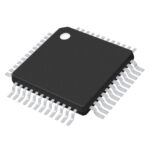 ATMEGA1609-AUR

The activity of extra discounts on wholesale prices is in full swing…
Please fill in your contact information and we will send you the latest wholesale price list.







