 ChipApex | Global Electronic Components Supplier

SEARCH
Search Product
Search Post
Search productSearch post
Consult the customer manager about the wholesale price.
consultation hotline:86-132-6715-2157
email:[email protected]
Contact the product manager for consultation. One-stop consultation is available.
Do you want a lower wholesale price? Please send us your inquiry and we will reply immediately.
ATMEGA162-16MI is listed in the Microcontrollers range at ChipApex. The manufacturer field lists Microchip Technology. Its product description is IC MCU 8BIT 16KB FLASH 44VQFN. Review the specifications below when checking this part for your BOM.
The ATmega162-16MI is an 8-bit microcontroller based on the AVR enhanced RISC architecture, manufactured by Microchip Technology. It features a 44-pad MLF package and supports speeds up to 16 MHz. The device includes 16K bytes of In-System Programmable Flash with Read-While-Write capabilities, 512 bytes of EEPROM, and 1K bytes of Internal SRAM. It provides 35 programmable I/O lines, two USARTs, an SPI interface, four Timer/Counters, and a JTAG interface for boundary-scan and debugging.
Verify the specific speed grade suffix '16' corresponds to the required 0-16 MHz operating frequency range. Confirm the 'MI' suffix indicates the 44-pad MLF package type. Ensure the voltage requirements align with the standard ATmega162 specifications (2.7V to 5.5V). Check for any specific environmental or industrial temperature ratings associated with this variant.
Select this component when a balance of processing throughput and peripheral richness is needed within a compact surface-mount footprint. The MLF package suits designs with limited board space. Consider the availability of development tools like C compilers and In-Circuit Emulators if extensive software development is planned.
This device belongs to the ATmega family of 8-bit AVR microcontrollers. It is pin-compatible with the ATmega161 but offers expanded I/O and interrupt capabilities. The ATmega162 series includes variants with different voltage ranges and speed grades, such as the V, U, and L versions, catering to diverse power and performance requirements.
ATmega161 is pin-compatible but lacks extended I/O and interrupt vectors; compatibility mode can be enabled via fuse settings.
It offers a compatibility mode selectable via the M161C fuse bit, which disables extended I/O functions and adjusts internal RAM location to match the ATmega161 architecture.
The JTAG interface provides boundary-scan capabilities according to IEEE std. 1149.1 and supports extensive on-chip debugging, including programming of Flash, EEPROM, fuses, and lock bits.
Explore related parts through Embedded, Integrated Circuits (ICs), all product categories, ChipApex homepage.
Microchip Technology ATMEGA162-16MI is usually screened in Microcontrollers category when power sequencing, recovery behavior, and I/O planning need a released validation path instead of ad hoc bring-up fixes. Key specs include Description (IC MCU 8BIT 16KB FLASH 44VQFN), Core (AVR), Speed (16MHz), Flash (16KB (8K x 16)), and RAM (1K x 8). On the assembled product, teams usually come back to i/o (35) before they treat the part as approved.
What are common selection points for a microcontroller like ATMEGA162-16MI?
Check flash/RAM headroom, peripheral set, connectivity options, package constraints, and availability for your production horizon.
Which Peripherals is listed for ATMEGA162-16MI?
Brown-out Detect/Reset, POR, PWM, etc.
What is the Connectivity of ATMEGA162-16MI?
EBI/EMI, SPI, UART/USART
What Oscillator Type does ATMEGA162-16MI have?
Internal
Microchip Technology ATMEGA162-16MI in the Microcontrollers category is usually shortlisted only after engineers lock the released interface, margin, and field condition that will decide acceptance on assembled hardware. Once the part is on the shipped assembly, the first review usually comes back to core (AVR), speed (16MHz), and flash (16KB (8K x 16)). Selection is driven by compute headroom, peripheral mix, toolchain maturity, lifecycle availability, and secure boot/update strategy. They commonly sit at the center of sensor fusion, protocol processing, or deterministic control loops where latency and reliability matter. Compute control paths are usually judged by boot sequencing, debug access, and domain interaction because many field failures begin as recoverability problems rather than as outright functional failures. In building automation, they aggregate sensor data and run local logic to keep systems functional even when cloud connectivity is intermittent.
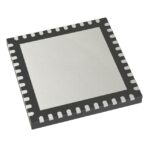 ATMEGA162-16MI

The activity of extra discounts on wholesale prices is in full swing…
Please fill in your contact information and we will send you the latest wholesale price list.





