 ChipApex | Global Electronic Components Supplier

SEARCH
Search Product
Search Post
Search productSearch post
Consult the customer manager about the wholesale price.
consultation hotline:86-132-6715-2157
email:[email protected]
Contact the product manager for consultation. One-stop consultation is available.
Do you want a lower wholesale price? Please send us your inquiry and we will reply immediately.
ATMEGA162-16PC is listed in the Microcontrollers range at ChipApex. The manufacturer field lists Microchip Technology. Its product description is IC MCU 8BIT 16KB FLASH 40DIP. Review the specifications below when checking this part for your BOM.
The ATmega162-16PC is a low-power CMOS 8-bit microcontroller based on the AVR enhanced RISC architecture. It features 16K bytes of In-System Programmable Flash, 512 bytes EEPROM, and 1K bytes SRAM. The device provides 35 programmable I/O lines and operates at speeds up to 16 MHz with a throughput approaching 1 MIPS per MHz. It includes two USARTs, an SPI interface, four Timer/Counters, and a JTAG interface for debugging.
Verify the specific speed grade suffix '16' corresponds to the required maximum operating frequency of 16 MHz. Confirm the package type 'PC' matches the intended 40-pin PDIP footprint for your circuit design. Ensure the voltage range aligns with the standard ATmega162 specifications rather than the V or U variants. Check for RoHS compliance status if required by your manufacturing standards.
Select this component when a balance of processing speed and low power consumption is required. The 16 MHz speed grade suits applications needing higher throughput than lower-speed variants. The PDIP package is suitable for through-hole prototyping or environments where surface mount assembly is not feasible. Consider the extended I/O space compatibility if migrating from older AVR models.
This microcontroller belongs to the ATmega family developed by Atmel, now Microchip Technology. It utilizes the AVR core architecture known for code efficiency and high throughput. The device is designed for embedded control applications, offering a cost-effective solution with integrated memory and peripherals on a monolithic chip.
The ATmega162 is pin-compatible with the ATmega161. However, verify fuse bit locations and electrical characteristics as they differ between the two devices. The M161C fuse can be programmed to enable ATmega161 compatibility mode for legacy code migration.
Explore related parts through Embedded, Integrated Circuits (ICs), all product categories, ChipApex homepage.
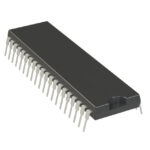 ATMEGA162-16PC

The activity of extra discounts on wholesale prices is in full swing…
Please fill in your contact information and we will send you the latest wholesale price list.





