 ChipApex | Global Electronic Components Supplier

SEARCH
Search Product
Search Post
Search productSearch post
Consult the customer manager about the wholesale price.
consultation hotline:86-132-6715-2157
email:[email protected]
Contact the product manager for consultation. One-stop consultation is available.
Do you want a lower wholesale price? Please send us your inquiry and we will reply immediately.
ATMEGA163-8AI is listed in the Microcontrollers range at ChipApex. The manufacturer field lists Microchip Technology. Its product description is IC MCU 8BIT 16KB FLASH 44TQFP. Review the specifications below when checking this part for your BOM.
The ATMEGA163-8AI is an 8-bit AVR microcontroller featuring 16K bytes of In-System Programmable Flash, 512 bytes EEPROM, and 1024 bytes SRAM. It operates at speeds up to 8 MHz with a supply voltage range of 4.0V to 5.5V. The device includes 32 programmable I/O lines, an 8-channel 10-bit ADC, three PWM channels, a Real Time Clock, and multiple communication interfaces including UART, SPI, and Two-wire Serial Interface.
Verify component authenticity through official Microchip Technology channels or authorized distributors. Confirm the specific suffix '8AI' corresponds to the 8 MHz speed grade and industrial temperature rating. Ensure design compliance with the manufacturer's recommendation to use alternative models like the ATmega16 for new designs due to the NRND status.
Select this component when legacy compatibility with the ATmega163 architecture is required. Consider the 4.0V to 5.5V operating voltage range suitable for standard 5V logic systems. Evaluate the 8 MHz maximum frequency against processing requirements. Note that the industrial temperature range supports broader environmental conditions compared to commercial variants.
The ATMEGA163 belongs to the megaAVR family produced by Microchip Technology, formerly Atmel. This series is based on the enhanced RISC architecture known for high throughput per MHz. The ATMEGA163 specifically bridges the gap between smaller 4K/8K devices and larger 32K+ controllers, offering a balanced mix of memory and peripherals for general-purpose embedded applications.
Microchip recommends using the ATmega16 as a replacement for new designs. Verify pinout compatibility and memory map differences before substitution. Review updated datasheets for any changes in electrical characteristics or peripheral functionality between the legacy ATmega163 and the recommended successor.
Explore related parts through Embedded, Integrated Circuits (ICs), all product categories, ChipApex homepage.
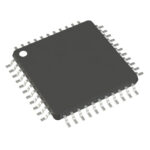 ATMEGA163-8AI

The activity of extra discounts on wholesale prices is in full swing…
Please fill in your contact information and we will send you the latest wholesale price list.






