 ChipApex | Global Electronic Components Supplier

SEARCH
Search Product
Search Post
Search productSearch post
Consult the customer manager about the wholesale price.
consultation hotline:86-132-6715-2157
email:[email protected]
Contact the product manager for consultation. One-stop consultation is available.
Do you want a lower wholesale price? Please send us your inquiry and we will reply immediately.
ATMEGA4809-MU is listed in the Microcontrollers range at ChipApex. The manufacturer field lists Microchip Technology. Its product description is IC MCU 8BIT 48KB FLASH 48QFN. Review the specifications below when checking this part for your BOM.
The ATMEGA4809-MU is an 8-bit AVR microcontroller from the megaAVR 0-series, manufactured by Microchip Technology. It features a 20 MHz RISC CPU with a hardware multiplier and provides 48 KB of in-system programmable Flash memory, 6 KB of SRAM, and 256 bytes of EEPROM. The device operates within a voltage range of 1.8V to 5.5V and supports industrial temperature ranges (-40°C to +85°C). It utilizes a 32-pin VQFN package and includes advanced peripherals such as a 10-bit ADC, four USARTs, SPI, TWI, and a dedicated UPDI interface for programming and debugging.
Verify the specific ordering suffix 'MU' corresponds to the 32-pin VQFN package and industrial temperature rating. Confirm RoHS compliance status through official documentation. Ensure the component matches the megaAVR 0-series specifications before integration into designs.
Select this model when 48 KB of program memory and up to 41 I/O lines are required. It is suitable for applications demanding high-speed serial communication via multiple USARTs or precise timing using the RTC. Consider the VQFN package constraints for PCB layout and thermal management during selection.
This component belongs to the megaAVR 0-series family, designed for vertical migration compatibility with other devices in the series. It shares architectural similarities with the ATmega4808 but offers higher pin counts and memory capacity. The series emphasizes low power consumption and advanced analog features for modern embedded applications.
ATMEGA4808-MU: Offers identical architecture and peripherals but with reduced memory size (8 KB Flash, 1 KB SRAM). Verify if the application requires the full 48 KB capacity before substituting.
The Event System allows peripherals to communicate directly without CPU intervention, ensuring predictable timing and reducing processor load.
UPDI provides a single-pin interface for both programming the flash memory and accessing debug tools, simplifying board design compared to traditional multi-pin interfaces.
Yes, the TWI interface can operate as a host and client at the same time on different pins, facilitating complex bus topologies.
Explore related parts through Embedded, Integrated Circuits (ICs), all product categories, ChipApex homepage.
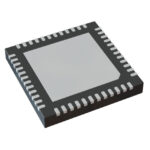 ATMEGA4809-MU

The activity of extra discounts on wholesale prices is in full swing…
Please fill in your contact information and we will send you the latest wholesale price list.






