 ChipApex | Global Electronic Components Supplier
SEARCH
Search Product
Search Post
— IC芯片 | 连接器 | 传感器 | 被动器件 —
Search productSearch post
— IC芯片 | 连接器 | 传感器 | 被动器件 —
Consult the customer manager about the wholesale price.
consultation hotline:86-132-6715-2157
email:[email protected]
Contact the product manager for consultation. One-stop consultation is available.
Do you want a lower wholesale price? Please send us your inquiry and we will reply immediately.
The ATMXT112UD-MAURHA1 is a maXTouch UD Series touchscreen controller from Microchip Technology, designed for home appliance applications. It features a unique charge-transfer acquisition engine supporting both mutual and self capacitance measurements to ensure accurate touch classification and tracking. The device supports up to 14 transmit lines and 24 receive lines, allocating a maximum of 112 nodes for sensor electrodes. It operates on a nominal 3.3V supply with an internal 6.6V voltage pump for X line drive. Communication is handled via I2C interface (up to 1 MHz) with an optional SPI debug interface. The component is housed in a 56-pin XQFN package (6x6x0.4 mm) and functions within an industrial temperature range of -40°C to +85°C.
Verify the specific ordering suffix 'R' confirms tape and reel packaging, distinct from the tray-supplied ATMXT112UD-MAUHA1. Confirm firmware revision 1.0.AB compatibility during integration. Ensure the design adheres to the recommended land pattern for the 56-pin XQFN package to maintain soldering integrity. Check for RoHS compliance status as detailed in the manufacturer's documentation.
Select this controller for designs requiring robust multi-touch performance in noisy environments typical of home appliances. The integrated water rejection algorithms are suitable for surfaces exposed to condensation. Ensure the host system supports I2C communication speeds up to 1 MHz for optimal report rates. Verify that the display stack-up allows for the required 10 mm glass or 5 mm PMMA coverage for bare finger operation.
This part belongs to the maXTouch UD Series, specifically optimized for home appliance use cases. It shares the core mXT112 architecture but includes specific hardware and firmware configurations for durability and environmental resistance. The 'MAURHA1' designation indicates the XQFN package, industrial temperature grade, and tape and reel shipping format.
The tray-packaged variant ATMXT112UD-MAUHA1 offers identical electrical and functional specifications but differs only in packaging format. No other direct cross-model substitutes are documented in the provided source material.
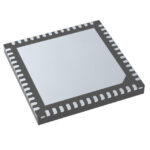 ATMXT112UD-MAURHA1
The activity of extra discounts on wholesale prices is in full swing…
Please fill in your contact information and we will send you the latest wholesale price list.





