 ChipApex | Global Electronic Components Supplier
SEARCH
Search Product
Search Post
— IC芯片 | 连接器 | 传感器 | 被动器件 —
Search productSearch post
— IC芯片 | 连接器 | 传感器 | 被动器件 —
Consult the customer manager about the wholesale price.
consultation hotline:86-132-6715-2157
email:[email protected]
Contact the product manager for consultation. One-stop consultation is available.
Do you want a lower wholesale price? Please send us your inquiry and we will reply immediately.
The ATMXT449TD-AB is an automotive-grade capacitive touchscreen controller from Microchip Technology, designed for high-performance multi-touch applications. It supports up to 32 transmit and 20 receive lines, allocating a maximum of 448 nodes for sensor configurations. The device operates within a temperature range of –40°C to +105°C and features a 100-pin TQFP package. Key electrical specifications include nominal 3.3V supplies for digital, I/O, and analog domains, with an internal voltage pump providing 6.6V for the X line drive. Communication interfaces include I2C-compatible slave modes up to 3.4 MHz and SPI slave up to 8 MHz.
Verify the specific ordering suffix against the Product Identification System table in the datasheet to confirm package type, temperature grade, and sample status. The 'AB' suffix denotes Grade 2 temperature range (–40°C to +105°C). Confirm whether the required quantity is supplied in trays or tape and reel by checking for the 'R' identifier in the part number. Ensure firmware revision compatibility during integration.
Select this model when an extended operating temperature range up to +105°C is required for automotive or industrial environments. The AB variant is suitable for designs where higher thermal tolerance is critical compared to the AT grade. Consider the 100-pin TQFP footprint for PCB layout constraints. Verify that the application benefits from the integrated self-capacitance augmentation for improved mutual capacitance accuracy in noisy conditions.
This component belongs to the maXTouch Adaptive Sensing Touchscreen Technology family. It utilizes a unique charge-transfer acquisition engine to implement patented capacitive sensing methods. The device integrates a state-of-the-art CPU to measure, classify, and track finger touches with high accuracy. It is distinct from other maXTouch devices by its specific node allocation capacity and automotive qualification status.
Publicly confirmed substitute part numbers are not provided in the source material. Designers should consult Microchip sales offices for alternative components with similar node counts and automotive qualifications. Ensure any replacement maintains compatibility with the existing I2C/SPI interface protocols and power supply requirements.
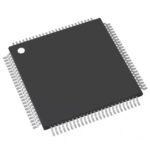 ATMXT449TD-AB
The activity of extra discounts on wholesale prices is in full swing…
Please fill in your contact information and we will send you the latest wholesale price list.






