 ChipApex | Global Electronic Components Supplier
SEARCH
Search Product
Search Post
— IC芯片 | 连接器 | 传感器 | 被动器件 —
Search productSearch post
— IC芯片 | 连接器 | 传感器 | 被动器件 —
Consult the customer manager about the wholesale price.
consultation hotline:86-132-6715-2157
email:[email protected]
Contact the product manager for consultation. One-stop consultation is available.
Do you want a lower wholesale price? Please send us your inquiry and we will reply immediately.
The ATMXT449TD-ATVA2 is an automotive-grade maXTouch touchscreen controller from Microchip Technology, designed for capacitive sensing applications. It supports up to 32 transmit and 20 receive lines, allocating a maximum of 448 nodes for touch detection. The device enables tracking of up to 16 concurrent touches with a typical report rate of at least 60 Hz for ten fingers. Operating within a temperature range of –40°C to +85°C, it utilizes a unique charge-transfer acquisition engine to measure mutual and self capacitance. The controller integrates advanced algorithms for noise suppression, water compensation, and glove support, ensuring reliable performance in demanding environments.
Verify the specific ordering suffix 'VA2' corresponds to the intended sample type and packaging configuration. Confirm that the Grade 3 temperature rating (–40°C to +85°C) aligns with the target application environment. Ensure design compliance with the recommended stack-up and sensor patterns approved by Microchip or its qualified partners for optimal performance.
Select this component when automotive certification (AEC-Q100) and high node count (448 max) are required. Choose the AT variant for standard automotive temperature ranges (-40°C to +85°C). Consider the AB variant if operation up to +105°C is necessary. Evaluate interface requirements to determine if I²C or SPI communication best suits the system architecture.
This part belongs to the mXT449TD family, which includes variants like the mXT449TD-AB for extended temperature ranges. The 'V' indicates a sample type, and 'A2' denotes the specific firmware revision and pattern configuration. It is distinct from non-automotive maXTouch controllers and offers higher node density compared to smaller footprint devices.
Direct replacements within the same package and pinout include other mXT449TD variants such as the ATMXT449TD-ABVA2 for higher temperature operation. For different node counts or packages, consult the full maXTouch portfolio datasheet to ensure compatibility with existing sensor designs and firmware configurations.
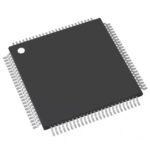 ATMXT449TD-ATVA2
The activity of extra discounts on wholesale prices is in full swing…
Please fill in your contact information and we will send you the latest wholesale price list.






