 ChipApex | Global Electronic Components Supplier
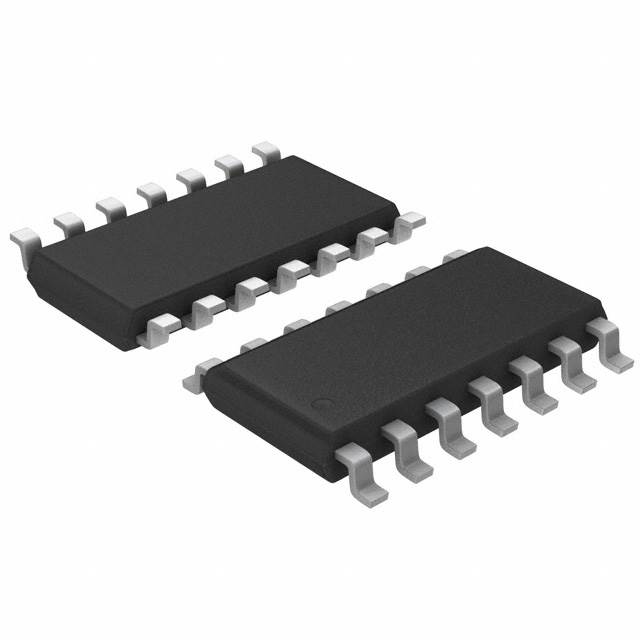
ATTINY1614-SSN
Search Product
Search Post
— IC芯片 | 连接器 | 传感器 | 被动器件 —
Search productSearch post
— IC芯片 | 连接器 | 传感器 | 被动器件 —
Consult the customer manager about the wholesale price.
consultation hotline:86-132-6715-2157
email:[email protected]
Contact the product manager for consultation. One-stop consultation is available.
Do you want a lower wholesale price? Please send us your inquiry and we will reply immediately.
The ATtiny1614-SSN is an 8-bit microcontroller from the tinyAVR 1-series, utilizing the AVR core with a hardware multiplier. It features 16 KB of self-programmable Flash memory, 2 KB of SRAM, and 256 bytes of EEPROM. The device operates at clock frequencies up to 20 MHz and supports supply voltages between 1.8 V and 5.5 V. It includes multiple timers, analog-to-digital converters, digital-to-analog converters, and communication interfaces such as USART, SPI, and TWI.
Verify the specific suffix 'SSN' corresponds to the 14-pin SOIC package and commercial temperature range (-40°C to +85°C or +105°C depending on speed grade) in the official Microchip datasheet DS40002204A. Confirm RoHS compliance status and ensure the ordering code matches the exact voltage and frequency grades required for your design specifications before procurement.
Select this component when a balance of moderate program memory and advanced analog peripherals is required within a compact footprint. The tinyAVR 1-series architecture offers superior performance per milliwatt compared to older AVR generations. Consider the availability of the UPDI interface for simplified development toolchains and the extensive set of configurable peripherals that reduce external component count.
This part belongs to the tinyAVR 1-series family, which introduces Core Independent Peripherals and enhanced analog capabilities. Unlike previous generations, it integrates sophisticated touch sensing and custom logic directly into the silicon. The series targets applications demanding high efficiency and reduced system complexity through integrated functionality rather than external discrete components.
Direct pin-compatible replacements within the same package may include other members of the ATtiny16xx series such as ATtiny1616 or ATtiny1617, provided memory sizes meet requirements. Cross-family migration to ATmega or PIC devices requires schematic and firmware redesign due to architectural differences.
The device supports clock frequencies up to 20 MHz, subject to specific voltage and temperature constraints defined in the datasheet.
Yes, it includes an integrated Peripheral Touch Controller (PTC) capable of handling up to 14 self-capacitance channels and up to 49 mutual capacitance channels.
Programming and debugging are performed via a single-pin Unified Program and Debug Interface (UPDI), eliminating the need for separate reset, clock, and data lines.
 ATTINY1614-SSN
The activity of extra discounts on wholesale prices is in full swing…
Please fill in your contact information and we will send you the latest wholesale price list.