 ChipApex | Global Electronic Components Supplier
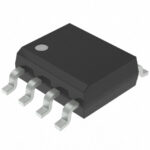
ATTINY202-SSFR
Search Product
Search Post
— IC芯片 | 连接器 | 传感器 | 被动器件 —
Search productSearch post
— IC芯片 | 连接器 | 传感器 | 被动器件 —
Consult the customer manager about the wholesale price.
consultation hotline:86-132-6715-2157
email:[email protected]
Contact the product manager for consultation. One-stop consultation is available.
Do you want a lower wholesale price? Please send us your inquiry and we will reply immediately.
The ATTINY202-SSFR is an 8-bit AVR microcontroller from the tinyAVR 0-Series, packaged in an 8-pin SOIC. It features 2 KB of Flash memory, 128 bytes of SRAM, and 64 bytes of EEPROM. The device operates at clock speeds up to 20 MHz with a supply voltage range of 1.8V to 5.5V. Key peripherals include a 10-bit ADC, USART, SPI, TWI, TCA, TCB, RTC, CCL, and Analog Comparator. It supports UPDI for programming and debugging.
Verify the specific temperature grade and speed bin required for your application against the datasheet specifications. Confirm that the SOIC-8 package dimensions match your PCB footprint requirements. Ensure compatibility with UPDI-based programmers for firmware development. Check for any RoHS compliance documentation if required by your manufacturing standards.
Select this component when a balance of processing power and extreme low-power consumption is needed. The tinyAVR 0-Series is ideal for applications where the CPU must remain asleep most of the time while peripherals handle periodic tasks. Consider the 2 KB Flash limit for complex algorithms; larger variants like ATtiny402 may be necessary for more extensive codebases.
This part belongs to the ATtiny202/402 family, which introduces Core Independent Peripherals to the AVR architecture. Unlike previous generations, these MCUs allow peripherals like the RTC and CCL to operate autonomously, significantly reducing active current consumption during background tasks.
Direct pin-compatible replacements within the same series include the ATtiny402, which offers increased memory but maintains the same 8-pin SOIC package and peripheral set. For legacy upgrades, verify that existing code is compatible with the UPDI interface instead of ISP or JTAG.
The device can run at up to 20 MHz using the internal RC oscillator.
SleepWalking allows specific peripherals to wake the MCU from sleep modes without waking the CPU, minimizing energy usage during idle periods.
Yes, a UPDI programmer is required as the device uses a single-pin Unified Program and Debug Interface for all programming and debugging functions.
 ATTINY202-SSFR
The activity of extra discounts on wholesale prices is in full swing…
Please fill in your contact information and we will send you the latest wholesale price list.