 ChipApex | Global Electronic Components Supplier

SEARCH
Search Product
Search Post
— IC芯片 | 连接器 | 传感器 | 被动器件 —
Search productSearch post
— IC芯片 | 连接器 | 传感器 | 被动器件 —
Consult the customer manager about the wholesale price.
consultation hotline:86-132-6715-2157
email:[email protected]
Contact the product manager for consultation. One-stop consultation is available.
Do you want a lower wholesale price? Please send us your inquiry and we will reply immediately.
The ATXMEGA64A1-AUR is an 8/16-bit AVR XMEGA microcontroller featuring 64KB of in-system self-programmable flash, 2KB EEPROM, and 4KB internal SRAM. It includes a 4-channel DMA controller, eight-channel event system, eight 16-bit timer/counters, four USARTs with IrDA support, four TWI interfaces, and four SPIs. The device integrates AES and DES crypto engines, two 12-bit ADCs, two 12-bit DACs, and four analog comparators. Operating voltage ranges from 1.6V to 3.6V, supporting frequencies up to 12MHz at 1.6V and 32MHz at 2.7V. It is housed in a 100-ball VFBGA package.
Verify component authenticity through authorized Microchip Technology distributors or direct channels. Confirm the specific ordering suffix matches the required package type and temperature range. Ensure compliance with RoHS directives as indicated in official documentation. Check for obsolescence status, as this model is not recommended for new designs; consider the XMEGA A1U series for future projects.
Select this microcontroller for applications requiring high performance with low power consumption in a compact 100-ball VFBGA package. Evaluate the need for extensive I/O lines and peripheral richness, including multiple serial interfaces and analog converters. Consider the availability of development tools and the QTouch library if capacitive sensing is required. Verify that the operating voltage and frequency requirements align with the system's power supply constraints.
This component belongs to the Atmel AVR XMEGA family, specifically the A1 series, known for rich peripherals and high efficiency. It utilizes the enhanced RISC architecture for fast code execution. The device supports various programming and debugging interfaces, including PDI and JTAG. It is designed for embedded applications needing flexible memory options and robust connectivity features.
Microchip recommends using the XMEGA A1U series for new designs instead of this model. Verify pin compatibility and software migration efforts when transitioning to alternative parts within the same family or newer generations.
The device supports the Program and Debug Interface (PDI) and an IEEE 1149.1 compliant JTAG interface for programming and debugging.
Yes, it supports capacitive touch sensing through the free QTouch library, enabling implementation of buttons, sliders, and wheels.
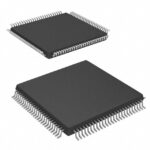 ATXMEGA64A1-AUR

The activity of extra discounts on wholesale prices is in full swing…
Please fill in your contact information and we will send you the latest wholesale price list.






