 ChipApex | Global Electronic Components Supplier

SEARCH
Search Product
Search Post
— IC芯片 | 连接器 | 传感器 | 被动器件 —
Search productSearch post
— IC芯片 | 连接器 | 传感器 | 被动器件 —
Consult the customer manager about the wholesale price.
consultation hotline:86-132-6715-2157
email:[email protected]
Contact the product manager for consultation. One-stop consultation is available.
Do you want a lower wholesale price? Please send us your inquiry and we will reply immediately.
The ATXMEGA64A1-C7UR is an 8/16-bit microcontroller from the AVR XMEGA A1 family. It features 64KB of in-system self-programmable flash, 2KB EEPROM, and 4KB internal SRAM. The device operates on a 1.6V to 3.6V power supply with clock frequencies up to 32MHz at 2.7V or higher. It includes a four-channel DMA controller, eight-channel event system, eight 16-bit timer/counters, four USARTs, four TWIs, and four SPIs. Analog peripherals consist of two 16-channel 12-bit ADCs, two 2-channel 12-bit DACs, and four analog comparators. Security is provided by AES and DES crypto engines. The component is housed in a 100-ball VFBGA package.
Verify that the specific ordering suffix matches the required package type and temperature range. Confirm compliance with RoHS directives as indicated in official documentation. Ensure design compatibility with the XMEGA A1U series, as this model is marked not recommended for new designs. Validate pinout configurations against the datasheet before finalizing PCB layouts.
Select this component when existing designs require the specific memory configuration and package style of the XMEGA A1 series. Consider the availability of development tools and libraries such as ASF and QTouch. Evaluate the trade-off between the established A1 architecture and the newer A1U series for future-proofing requirements. Ensure sufficient I/O count and peripheral availability for the target application complexity.
This microcontroller belongs to the AVR XMEGA A1 family, designed for high performance and low power consumption. It utilizes Atmel's picoPower technology to maintain low sleep currents regardless of memory size. The family supports read-while-write flash operations and features a rich set of peripherals for complex embedded tasks. It serves as a robust solution for battery-powered applications requiring significant processing power.
Microchip recommends using the XMEGA A1U series for new designs. Verify pin-to-pin compatibility and software migration paths when transitioning from the A1 to the A1U series. Check for any differences in peripheral implementations or electrical characteristics between the generations.
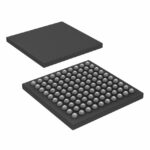 ATXMEGA64A1-C7UR

The activity of extra discounts on wholesale prices is in full swing…
Please fill in your contact information and we will send you the latest wholesale price list.






