 ChipApex | Global Electronic Components Supplier

SEARCH
Search Product
Search Post
— IC芯片 | 连接器 | 传感器 | 被动器件 —
Search productSearch post
— IC芯片 | 连接器 | 传感器 | 被动器件 —
Consult the customer manager about the wholesale price.
consultation hotline:86-132-6715-2157
email:[email protected]
Contact the product manager for consultation. One-stop consultation is available.
Do you want a lower wholesale price? Please send us your inquiry and we will reply immediately.
The ATXMEGA64A3U-MHR is an 8/16-bit AVR XMEGA microcontroller featuring a 64KB in-system self-programmable flash memory, 2KB EEPROM, and 4KB internal SRAM. It operates at frequencies up to 32MHz with a supply voltage range of 1.6V to 3.6V. The device includes a four-channel DMA controller, eight-channel event system, seven 16-bit timer/counters, one USB 2.0 full-speed interface, seven USARTs, two TWIs, three SPIs, AES/DES crypto engine, two 16-channel 12-bit ADCs, one 2-channel 12-bit DAC, and four analog comparators. It utilizes a 64-pad QFN package.
Verify the specific ordering suffix 'MHR' corresponds to the tape and reel packaging format as documented in the official datasheet. Confirm that the component meets RoHS compliance and halide-free requirements specified by the manufacturer. Ensure compatibility with standard surface-mount assembly processes for the 64-pad QFN package.
Select this component when a balance of moderate program memory size and rich peripheral integration is required. The inclusion of a dedicated USB interface and cryptographic engine makes it suitable for secure communication applications. Consider the operating voltage range and temperature specifications to ensure suitability for the target environment.
This part belongs to the Microchip AVR XMEGA A3U family, designed for high-performance, low-power embedded applications. The series combines an 8/16-bit RISC CPU with nonvolatile memory technologies and a wide array of peripherals. It serves as a successor to earlier AVR architectures, offering improved throughput and energy efficiency for complex control tasks.
The ATXMEGA64A3U-AUR is a compatible alternative within the same family, differing primarily in its TQFP-64 package instead of the QFN-64 form factor. Both variants share identical electrical characteristics, memory sizes, and peripheral configurations.
The device supports operating frequencies up to 32MHz when powered between 2.7V and 3.6V, and up to 12MHz when powered between 1.6V and 3.6V.
Yes, the device supports capacitive touch buttons, sliders, and wheels through the Atmel QTouch library, which can be integrated into the application software.
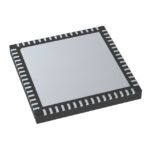 ATXMEGA64A3U-MHR

The activity of extra discounts on wholesale prices is in full swing…
Please fill in your contact information and we will send you the latest wholesale price list.






