 ChipApex | Global Electronic Components Supplier

SEARCH
Search Product
Search Post
— IC芯片 | 连接器 | 传感器 | 被动器件 —
Search productSearch post
— IC芯片 | 连接器 | 传感器 | 被动器件 —
Consult the customer manager about the wholesale price.
consultation hotline:86-132-6715-2157
email:[email protected]
Contact the product manager for consultation. One-stop consultation is available.
Do you want a lower wholesale price? Please send us your inquiry and we will reply immediately.
The ATXMEGA64A4-AU is an 8/16-bit AVR XMEGA microcontroller featuring 64 KB of In-System Self-Programmable Flash, 4 KB of Boot Code Section, 2 KB of EEPROM, and 4 KB of Internal SRAM. It operates at a maximum clock frequency of 32 MHz with a supply voltage range of 1.6 V to 3.6 V. The device includes a four-channel DMA controller, eight-channel event system, five 16-bit Timer/Counters, five USARTs, two TWIs, two SPIs, AES/DES crypto engine, one 12-channel 12-bit ADC, one two-channel 12-bit DAC, and two analog comparators. It provides 34 programmable I/O lines in a 44-lead TQFP package.
Verify the component status as this specific model is not recommended for new designs; the XMEGA A4U series is the designated successor. Confirm that the ordering suffix 'AU' corresponds to the 44-lead TQFP package variant. Ensure compliance with RoHS directives and verify humidity sensitivity handling requirements during assembly.
Select this component only if legacy compatibility with the XMEGA A4 family is required. Evaluate the 32 MHz performance against power consumption constraints within the 1.6 V to 3.6 V operating range. Consider the availability of development tools and software frameworks compatible with the AVR XMEGA architecture for implementation.
This part belongs to the Atmel AVR XMEGA A4 microcontroller family, manufactured by Microchip Technology. It utilizes CMOS technology and supports In-System Programming via the PDI interface. The device is designed for embedded applications requiring high performance and low power consumption, featuring read-while-write capabilities in its Flash memory.
Microchip recommends using the XMEGA A4U series as a replacement for new designs. Verify pinout compatibility and peripheral feature parity when migrating from the ATXMEGA64A4-AU to newer alternatives within the same product line.
Microchip recommends using the XMEGA A4U series for new designs instead of the ATXMEGA64A4-AU.
Yes, the device features In-System Programmable Flash with Read-While-Write capabilities, allowing the bootloader to run while the application section is updated.
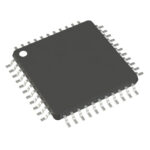 ATXMEGA64A4-AU

The activity of extra discounts on wholesale prices is in full swing…
Please fill in your contact information and we will send you the latest wholesale price list.





