 ChipApex | Global Electronic Components Supplier

SEARCH
Search Product
Search Post
— IC芯片 | 连接器 | 传感器 | 被动器件 —
Search productSearch post
— IC芯片 | 连接器 | 传感器 | 被动器件 —
Consult the customer manager about the wholesale price.
consultation hotline:86-132-6715-2157
email:[email protected]
Contact the product manager for consultation. One-stop consultation is available.
Do you want a lower wholesale price? Please send us your inquiry and we will reply immediately.
The AVR128DA32-E/RXB is an 8-bit microcontroller from the AVR DA family, featuring a 24 MHz AVR CPU with hardware multiplier. It includes 128 KB Flash, 16 KB SRAM, and 512 B EEPROM. The device operates within a 1.8 V to 5.5 V supply range and supports -40°C to +125°C temperatures. It provides 27 I/O pins in a 32-pin VQFN package. Peripherals include a 12-bit ADC, 10-bit DAC, three analog comparators, three zero-cross detectors, PTC, CCL, USART, SPI, TWI/I2C, TCA, TCB, TCD, RTC, WDT, and UPDI.
Verify the ordering suffix RXB confirms the 32-pin VQFN package and E suffix indicates extended temperature range (-40°C to +125°C). Confirm the specific datasheet revision matches your design requirements. Ensure compatibility with UPDI programming tools. Check for any recent product change notices regarding packaging or electrical characteristics before finalizing procurement.
Select this component when vertical migration within the AVR DA family is required without code modification. Choose this part if 128 KB of program memory and 16 KB of RAM are necessary for complex firmware. Opt for this MCU when integrated analog peripherals like the 12-bit ADC and PTC reduce external component count. Consider this device for designs needing robust industrial temperature operation and single-wire debugging capabilities.
This microcontroller belongs to the AVR DA family, which combines the AVR CPU with intelligent analog features and advanced digital peripherals. The family emphasizes low-power architecture and event-driven system design. Devices in this series support seamless vertical migration across different pin counts and memory sizes while maintaining feature compatibility.
AVR128DA28-E/RXB offers similar functionality with reduced pin count and peripheral availability. AVR128DA48-E/MR provides increased I/O capacity and additional timers in a larger package. AVR64DA32 variants offer lower memory density but maintain comparable peripheral sets. Verify pinout compatibility and memory size requirements when evaluating these alternatives.
The device runs at up to 24 MHz using the internal high-frequency oscillator or external clock sources.
The 32-pin VQFN package provides 27 programmable general-purpose I/O pins.
Yes, the TWI/I2C interface can operate simultaneously as master and slave on different pins.
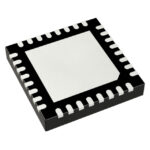 AVR128DA32-E/RXB

The activity of extra discounts on wholesale prices is in full swing…
Please fill in your contact information and we will send you the latest wholesale price list.






