 ChipApex | Global Electronic Components Supplier

SEARCH
Search Product
Search Post
— IC芯片 | 连接器 | 传感器 | 被动器件 —
Search productSearch post
— IC芯片 | 连接器 | 传感器 | 被动器件 —
Consult the customer manager about the wholesale price.
consultation hotline:86-132-6715-2157
email:[email protected]
Contact the product manager for consultation. One-stop consultation is available.
Do you want a lower wholesale price? Please send us your inquiry and we will reply immediately.
The AVR16DD28T-E/SO is an 8-bit microcontroller from the AVR DD Family, featuring a 16 KB Flash program memory, 2 KB SRAM, and 256 bytes of EEPROM. It operates at a maximum clock frequency of 24 MHz with a supply voltage range of 1.8 V to 5.5 V. The device includes a 12-bit ADC with 19 channels, a 10-bit DAC, two USARTs, SPI, and TWI interfaces. It utilizes an SSOP-28 package and supports extended temperature operation from -40°C to +125°C.
Verify the specific ordering suffix against official Microchip documentation to confirm package type and temperature grade. Ensure the 'E' suffix corresponds to the required extended temperature range (-40°C to +125°C). Confirm that the 'SO' designation matches the SOIC-28 package requirement for your PCB layout. Cross-reference the datasheet revision to ensure compatibility with current manufacturing specifications.
Select this component when 16 KB of Flash memory is sufficient for application code. Choose the AVR16DD28T-E/SO over higher-memory variants if pin count and peripheral requirements are met by the 28-pin configuration. Consider the extended temperature rating if operating in harsh environments. Verify that the 19-channel ADC and dual USART capabilities align with sensor and communication needs.
This part belongs to the AVR DD Family, which offers vertical migration compatibility within the series. It shares architectural similarities with the AVR32DD28 and AVR64DD28 models, allowing for potential code reuse across different memory sizes. The family emphasizes low-power operation and advanced digital peripherals while maintaining a standard AVR CPU core.
AVR16DD28T-E/SS
Multi-Voltage I/O (MVIO) allows PORTC pins to operate at a different voltage level than the core supply, enabling direct interfacing with external devices running at different voltages.
The Event System enables predictable, CPU-independent signaling between peripherals, reducing processor load and improving response times for time-critical tasks.
The ZCD detects zero-crossing points of AC signals, which is useful for power control applications such as dimming or motor speed regulation.
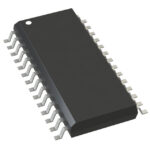 AVR16DD28T-E/SO

The activity of extra discounts on wholesale prices is in full swing…
Please fill in your contact information and we will send you the latest wholesale price list.





