 ChipApex | Global Electronic Components Supplier

SEARCH
Search Product
Search Post
— IC芯片 | 连接器 | 传感器 | 被动器件 —
Search productSearch post
— IC芯片 | 连接器 | 传感器 | 被动器件 —
Consult the customer manager about the wholesale price.
consultation hotline:86-132-6715-2157
email:[email protected]
Contact the product manager for consultation. One-stop consultation is available.
Do you want a lower wholesale price? Please send us your inquiry and we will reply immediately.
The AVR16DU32T-I/RXB is an 8-bit microcontroller from the AVR DU family, featuring a 16 KB Flash memory section with read-while-write capability, 2 KB SRAM, and 256 bytes of EEPROM. It operates at clock speeds up to 24 MHz within a supply voltage range of 1.8 V to 5.5 V. The device includes a USB 2.0 full-speed device interface, two USARTs, one SPI, one TWI/I2C, one TCA, two TCBs, one RTC, one 10-bit ADC, and one Analog Comparator. It is housed in a 32-pin VQFN package.
Verify the specific ordering suffix RXB confirms the 32-pin VQFN package and T indicates tape and reel packaging. Confirm the I suffix denotes the industrial temperature range of -40°C to +85°C. Ensure the preliminary datasheet status is acceptable for your design timeline. Cross-reference the manufacturer part number with official Microchip documentation to avoid counterfeit components.
Select this component when a compact 32-pin solution with integrated USB connectivity is required. The 16 KB Flash capacity suits applications with moderate code size requirements. Consider the 1.8 V to 5.5 V operating range for versatile power supply designs. Evaluate the peripheral count against system needs, noting the single 10-bit ADC and limited channel availability compared to larger variants.
This device belongs to the AVR DU family, which emphasizes low power consumption and high performance through a hardware multiplier. The family offers vertical migration compatibility across pin counts without code modification. The AVR16DU32 variant provides a balance of memory and I/O capabilities within a small footprint, targeting cost-sensitive embedded applications.
AVR32DU32T-I/RXB: Offers increased Flash and SRAM with identical pinout and features. AVR64DU32T-I/RXB: Provides higher memory capacity while maintaining pin and feature compatibility. These alternatives allow for horizontal or vertical migration within the same family without redesigning the PCB layout.
No, the USB function is only available when the VDD is above 3.0 V.
PDID prevents access to the reprogrammable Flash memory over the UPDI after activation, protecting against remote attacks and unauthorized code modification.
Yes, the TWI/I2C can operate simultaneously as both host and client on different pins.
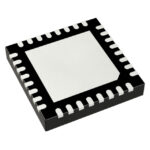 AVR16DU32T-I/RXB

The activity of extra discounts on wholesale prices is in full swing…
Please fill in your contact information and we will send you the latest wholesale price list.





