 ChipApex | Global Electronic Components Supplier

SEARCH
Search Product
Search Post
— IC芯片 | 连接器 | 传感器 | 被动器件 —
Search productSearch post
— IC芯片 | 连接器 | 传感器 | 被动器件 —
Consult the customer manager about the wholesale price.
consultation hotline:86-132-6715-2157
email:[email protected]
Contact the product manager for consultation. One-stop consultation is available.
Do you want a lower wholesale price? Please send us your inquiry and we will reply immediately.
The AVR16EB14-E/SL is an 8-bit microcontroller from the AVR EB Family, featuring a 16 KB Flash memory, 2 KB SRAM, and 512 bytes of EEPROM. It operates at clock speeds up to 20 MHz with a supply voltage range of 1.8 V to 5.5 V. The device includes a 12-bit differential ADC, two analog comparators, and multiple timers including TCB, TCE, TCF, and RTC. It supports communication via USART, SPI, and TWI interfaces. The -E suffix indicates an extended temperature range of -40°C to +125°C, while /SL denotes the SOIC-14 package.
Verify the specific ordering suffixes to confirm the package style and temperature range match your design requirements. The 'E' suffix denotes extended temperature operation, and 'SL' specifies the SOIC-14 package. Ensure compatibility with existing toolchains and debuggers supporting the Unified Program and Debug Interface (UPDI). Consult the official datasheet for detailed pinout and electrical characteristics before finalizing procurement.
Select this component when a balance of moderate memory size and advanced analog features is required in a compact 14-pin form factor. The extended temperature rating makes it suitable for harsh environments where standard industrial grades are insufficient. Consider the availability of peripheral resources such as the number of available I/O pins and timer channels relative to system complexity. Evaluate power consumption profiles across different sleep modes if battery operation is a constraint.
This part belongs to the AVR EB Family, which emphasizes low power and high performance within Microchip's 8-bit portfolio. It shares architectural similarities with other members like the AVR16EB20 and AVR32EB14, allowing for potential vertical migration without code modification. The family utilizes the latest AVR CPU core technology optimized for efficiency and ease of integration into various embedded applications.
Direct substitutes within the same package and feature set include other variants from the AVR16EB14 series with different temperature ratings or package options. Cross-family migration to PIC16 devices may require significant software adaptation due to architectural differences. Verify pin compatibility and peripheral functionality when considering alternative microcontrollers from different manufacturers.
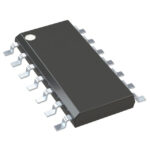 AVR16EB14-E/SL

The activity of extra discounts on wholesale prices is in full swing…
Please fill in your contact information and we will send you the latest wholesale price list.





