 ChipApex | Global Electronic Components Supplier

SEARCH
Search Product
Search Post
— IC芯片 | 连接器 | 传感器 | 被动器件 —
Search productSearch post
— IC芯片 | 连接器 | 传感器 | 被动器件 —
Consult the customer manager about the wholesale price.
consultation hotline:86-132-6715-2157
email:[email protected]
Contact the product manager for consultation. One-stop consultation is available.
Do you want a lower wholesale price? Please send us your inquiry and we will reply immediately.
The AVR16EB20T-I/REB is an 8-bit microcontroller from the AVR EB Family, featuring a 16 KB Flash memory with read-while-write capability, 2 KB SRAM, and 512 bytes of EEPROM. It operates at clock speeds up to 20 MHz within a supply voltage range of 1.8 V to 5.5 V. The device includes a 12-bit differential ADC with a programmable gain amplifier, two 16-bit Timer/Counters type B (TCB), one Timer/Counter type E (TCE) with Waveform Extension, and one Timer/Counter type F (TCF). Communication interfaces include USART, SPI, and TWI/I2C. It is housed in a VQFN-20 package.
Verify the ordering suffix 'I' confirms the industrial temperature range (-40°C to +85°C) and 'REB' specifies the VQFN-20 package with tape and reel carrier. Confirm that the datasheet version matches the specific revision required for your design, as preliminary documents may undergo updates before final release. Ensure compatibility with existing UPDI programmers.
Select this component when vertical migration within the AVR EB family is required without code modification. It is suitable for designs needing 16 KB of non-volatile storage and 2 KB of RAM in a compact 20-pin form factor. Consider the extended temperature variant if ambient conditions exceed 85°C. Verify that the 20 MHz maximum frequency meets the real-time processing requirements of the application.
This part belongs to the AVR16EB14/20/28/32 series, which shares pin and feature compatibility for easy vertical migration. The AVR EB Family utilizes the latest low-power architecture with hardware multipliers and advanced digital peripherals. It is designed to replace legacy AVR devices while offering enhanced analog capabilities and flexible event-driven architectures.
AVR16EB20T-E/REB offers the same specifications but supports an extended temperature range up to +125°C.
The User Row provides 64 bytes of nonvolatile memory that can retain data during chip-erase operations and can be programmed even when the device is locked.
The Event System allows peripherals to communicate directly without CPU intervention, enabling predictable timing and reducing power consumption by keeping the CPU in sleep modes longer.
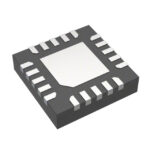 AVR16EB20T-I/REB

The activity of extra discounts on wholesale prices is in full swing…
Please fill in your contact information and we will send you the latest wholesale price list.






