 ChipApex | Global Electronic Components Supplier
SEARCH
Search Product
Search Post
— IC芯片 | 连接器 | 传感器 | 被动器件 —
Search productSearch post
— IC芯片 | 连接器 | 传感器 | 被动器件 —
Consult the customer manager about the wholesale price.
consultation hotline:86-132-6715-2157
email:[email protected]
Contact the product manager for consultation. One-stop consultation is available.
Do you want a lower wholesale price? Please send us your inquiry and we will reply immediately.
The AVR32DB28-E/SP is an 8-bit microcontroller from the AVR DB family, featuring a 24 MHz AVR CPU with hardware multiplier. It includes 32 KB Flash, 4 KB SRAM, and 512 B EEPROM. The device operates within a 1.8 V to 5.5 V supply range and supports -40°C to +125°C extended temperature. It utilizes a 28-pin SPDIP package and provides 22 I/O pins, a 12-bit ADC, three analog comparators, one DAC, and multi-voltage I/O capabilities.
Verify the ordering suffix 'E' confirms the extended temperature range (-40°C to +125°C) and 'SP' indicates the SPDIP package style. Ensure the specific revision matches the datasheet DS40002301B. Confirm that the intended application environment aligns with the specified voltage and thermal limits before finalizing procurement.
Select this variant when extended industrial or automotive temperature ratings are mandatory. The SPDIP package is suitable for through-hole prototyping or high-reliability manual assembly. Consider the AVR32DB28-E/SS or E/SO if surface-mount technology is preferred for automated production lines while maintaining identical electrical characteristics.
This component belongs to the AVR DB family, which emphasizes vertical migration compatibility across pin counts. It shares architectural features with the AVR DD and EA families but offers distinct memory configurations and peripheral sets tailored for cost-sensitive yet feature-rich embedded designs.
AVR32DB28-E/SS and AVR32DB28-E/SO are pin-compatible alternatives offering the same functionality in SSOP and SOIC packages respectively. These substitutes allow for design changes regarding footprint requirements without modifying firmware or core circuitry.
No, Multi-Voltage I/O (MVIO) is specifically available on Port C only, allowing these pins to interface with higher voltage domains directly.
The AVR CPU runs at a maximum frequency of 24 MHz, supported by various clock options including internal oscillators and external crystals.
The device integrates three Analog Comparators (ACs), each capable of window compare functions for precise signal monitoring.
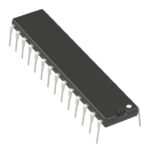 AVR32DB28-E/SP
The activity of extra discounts on wholesale prices is in full swing…
Please fill in your contact information and we will send you the latest wholesale price list.






