ChipApex | Global Electronic Components Supplier
SEARCH
Search Product
Search Post
— IC芯片 | 连接器 | 传感器 | 被动器件 —
Search productSearch post
— IC芯片 | 连接器 | 传感器 | 被动器件 —
Consult the customer manager about the wholesale price.
consultation hotline:86-132-6715-2157
email:[email protected]
Contact the product manager for consultation. One-stop consultation is available.
Do you want a lower wholesale price? Please send us your inquiry and we will reply immediately.
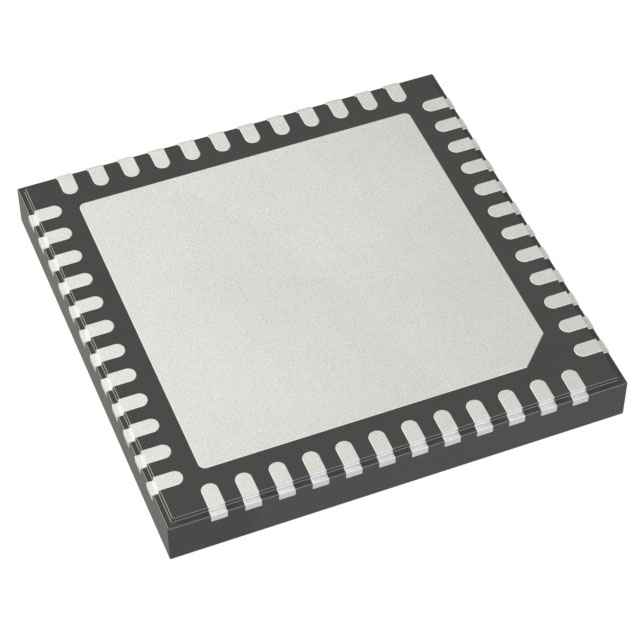
The AVR64DA48ST-E/6MX is an 8-bit microcontroller from the AVR DA series, manufactured by Microchip Technology. It features a 24 MHz maximum clock frequency and utilizes a 48-VQFN (6x6) package with exposed pad for surface mount installation. The device provides 64 kB of Flash program memory and 8 kB of SRAM data RAM. It includes a 12-bit ADC with multiple channels, three comparators, a 10-bit DAC, and supports interfaces such as I2C, SPI, and USART. The operating temperature range extends from -40°C to +125°C, and it functions within a supply voltage range of 1.8 V to 5.5 V.
Verify the specific suffix 'ST' indicates the tape and reel packaging format when ordering. Confirm the 'E' grade designation aligns with the required extended temperature specifications for your application environment. Ensure compatibility with the 48-VQFN footprint during PCB layout design. Cross-reference the datasheet revision to confirm pinout consistency with existing designs.
Select this component when a balance of moderate I/O count and advanced analog performance is required in a compact form factor. The 48-pin QFN package suits space-constrained designs needing robust thermal dissipation via the exposed pad. Consider the 24 MHz speed limit against higher-frequency alternatives if computational throughput is critical. Evaluate the 64 kB memory size against application code complexity before finalizing the choice.
This part belongs to the AVR DA family, which combines the AVR core with independent peripheral controllers and enhanced analog blocks. The series targets applications requiring both digital control and analog precision. The 'AVR64DA' designation specifically denotes the 64 kB Flash memory variant within the 48-pin package lineup, distinguishing it from lower or higher density options in the same series.
Publicly confirmed substitute part numbers are not available in the provided documentation. Verify functional equivalence with other AVR DA series members, such as the AVR64DA48-I/PT, noting differences in packaging and temperature grades.
 AVR64DA48ST-E/6MX
The activity of extra discounts on wholesale prices is in full swing…
Please fill in your contact information and we will send you the latest wholesale price list.