 ChipApex | Global Electronic Components Supplier
SEARCH
Search Product
Search Post
— IC芯片 | 连接器 | 传感器 | 被动器件 —
Search productSearch post
— IC芯片 | 连接器 | 传感器 | 被动器件 —
Consult the customer manager about the wholesale price.
consultation hotline:86-132-6715-2157
email:[email protected]
Contact the product manager for consultation. One-stop consultation is available.
Do you want a lower wholesale price? Please send us your inquiry and we will reply immediately.
The AVR64DA64S-E/PT is an 8-bit microcontroller from the AVR DA(S) family, utilizing the AVR CPU with a hardware multiplier. It operates at up to 24 MHz and features 64 KB of Flash memory, 8 KB of SRAM, and 512 B of EEPROM. The device includes a 12-bit differential ADC with 22 channels, three analog comparators, one 10-bit DAC, and six USARTs. It supports UPDI for programming and debugging. The 'E' suffix indicates an extended temperature range of -40°C to +125°C, while 'S' denotes the inclusion of the Program and Debug Interface Disable (PDID) security feature.
Verify that the ordering suffix 'S' is required for the specific Project and Debug Interface Disable (PDID) functionality. Confirm the 'E' suffix matches the operational temperature requirements of the target environment. Ensure the TQFP package style aligns with the PCB footprint design. Cross-reference the datasheet revision to confirm peripheral availability.
Select this variant when both extended temperature operation (-40°C to +125°C) and enhanced security via PDID are necessary. Compare with non-S variants if PDID is not needed. Consider the 64-pin count for maximum I/O availability compared to smaller packages in the same family.
This component belongs to the AVR DA(S) family, which offers flexible low-power architecture. The 'S' designation specifically identifies devices equipped with the PDID security mechanism. The 'E' rating extends the industrial temperature range to support harsher operating conditions compared to standard industrial parts.
AVR64DA64-I/PT provides identical specifications except for the industrial temperature range (-40°C to +85°C). AVR64DA64S-I/PT offers the same security features but with the lower temperature rating. Verify package compatibility when substituting.
The 'S' suffix indicates that the device includes the Program and Debug Interface Disable (PDID) feature, which prevents external access to Flash memory via UPDI once activated.
After activating PDID, the UPDI cannot erase or reprogram the device directly. Updates must be performed using software stored in the Boot Code section of the Flash memory.
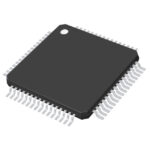 AVR64DA64S-E/PT
The activity of extra discounts on wholesale prices is in full swing…
Please fill in your contact information and we will send you the latest wholesale price list.







