 ChipApex | Global Electronic Components Supplier
SEARCH
Search Product
Search Post
— IC芯片 | 连接器 | 传感器 | 被动器件 —
Search productSearch post
— IC芯片 | 连接器 | 传感器 | 被动器件 —
Consult the customer manager about the wholesale price.
consultation hotline:86-132-6715-2157
email:[email protected]
Contact the product manager for consultation. One-stop consultation is available.
Do you want a lower wholesale price? Please send us your inquiry and we will reply immediately.
The AVR64DB28-E/SS is an 8-bit microcontroller from the AVR DB family, featuring a hardware multiplier running at up to 24 MHz. It includes 64 KB of Flash memory, 8 KB of SRAM, and 512 bytes of EEPROM. The device operates within a supply voltage range of 1.8 V to 5.5 V and supports an extended temperature range of -40°C to +125°C. Key peripherals include a 12-bit ADC with 13 channels, three analog comparators, three zero-cross detectors, a 10-bit DAC, and multiple communication interfaces such as USART, SPI, and TWI.
Verify the ordering suffix 'E' confirms the extended temperature rating (-40°C to +125°C). Confirm the '/SS' suffix indicates the SSOP-28 package style. Ensure compatibility with existing designs by checking pinout alignment against other AVR DB family members if migration is considered. Cross-reference the specific datasheet revision DS40002300B for any errata or additional constraints.
Select this component when 64 KB of program memory and 8 KB of RAM are sufficient for the application requirements. The 28-pin SSOP package is suitable for designs prioritizing compact footprint over higher I/O counts. Consider the AVR64DB28-E/SS for applications needing multi-voltage I/O capabilities and advanced analog features like op amps and ZCDs within a low-power architecture.
This device belongs to the AVR DB family, which offers vertical migration compatibility without code modification across varying pin counts and memory sizes. The AVR64DB28 variant serves as the entry point for the 64 KB Flash series in the 28-pin form factor. It shares architectural similarities with larger variants like the AVR64DB48 but with reduced peripheral channel counts due to pin limitations.
AVR64DB28-I/SS (Industrial temperature range)
Multi-Voltage I/O (MVIO) on Port C allows the selection of input voltage thresholds, enabling the pins to interface safely with external circuits operating at different voltage levels than the core supply.
The Event System allows peripherals to communicate and trigger actions independently of the CPU, ensuring predictable timing and reducing processor load for time-critical tasks.
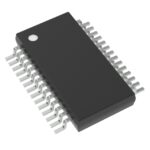 AVR64DB28-E/SS
The activity of extra discounts on wholesale prices is in full swing…
Please fill in your contact information and we will send you the latest wholesale price list.





