 ChipApex | Global Electronic Components Supplier
SEARCH
Search Product
Search Post
— IC芯片 | 连接器 | 传感器 | 被动器件 —
Search productSearch post
— IC芯片 | 连接器 | 传感器 | 被动器件 —
Consult the customer manager about the wholesale price.
consultation hotline:86-132-6715-2157
email:[email protected]
Contact the product manager for consultation. One-stop consultation is available.
Do you want a lower wholesale price? Please send us your inquiry and we will reply immediately.
The AWCR-20.00MD is a ceramic resonator manufactured by Abracon LLC, designed for through-hole mounting applications. It operates at a nominal frequency of 20 MHz with a tolerance of ±0.3% and stability of ±0.3%. The component features built-in capacitors with a capacitance value of 30 pF and a resonant impedance of 40 Ohms. It supports a load capacitance of 30 pF and exhibits a frequency-temperature coefficient of -25 ppm/°C². The device functions within an operating temperature range of -25°C to +85°C.
Verify the specific suffix requirements against the official Abracon datasheet to ensure compatibility with your board layout and thermal profile. Confirm that the through-hole pin spacing matches your PCB footprint dimensions. Check for RoHS compliance status if required by your manufacturing standards. Ensure the 30 pF internal capacitance aligns with your circuit design requirements without external loading components.
Choose this component when a cost-effective, simple timing solution is needed for microcontrollers or logic circuits. It is suitable for applications where moderate frequency stability is acceptable and space constraints allow for through-hole mounting. Consider the 40 Ohm impedance and 30 pF capacitance values when designing the oscillator circuit to ensure proper startup and operation.
This part belongs to Abracon's AWCR series of ceramic resonators, which are passive timing components used as alternatives to quartz crystals in less demanding applications. The series offers various frequencies and packages, providing designers with options for different mounting styles and performance levels. Ceramic resonators generally offer lower Q-factors than crystals but provide adequate stability for many digital logic applications.
Direct substitutes must match the 20 MHz frequency, 30 pF capacitance, and through-hole 3-pin package. Verify impedance and temperature characteristics. Cross-reference with other manufacturers' ceramic resonator specifications to ensure functional equivalence in your specific circuit design.
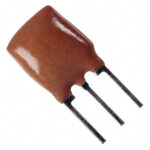 AWCR-20.00MD
The activity of extra discounts on wholesale prices is in full swing…
Please fill in your contact information and we will send you the latest wholesale price list.




