ChipApex | Global Electronic Components Supplier
SEARCH
Search Product
Search Post
— IC芯片 | 连接器 | 传感器 | 被动器件 —
Search productSearch post
— IC芯片 | 连接器 | 传感器 | 被动器件 —
Consult the customer manager about the wholesale price.
consultation hotline:86-132-6715-2157
email:[email protected]
Contact the product manager for consultation. One-stop consultation is available.
Do you want a lower wholesale price? Please send us your inquiry and we will reply immediately.
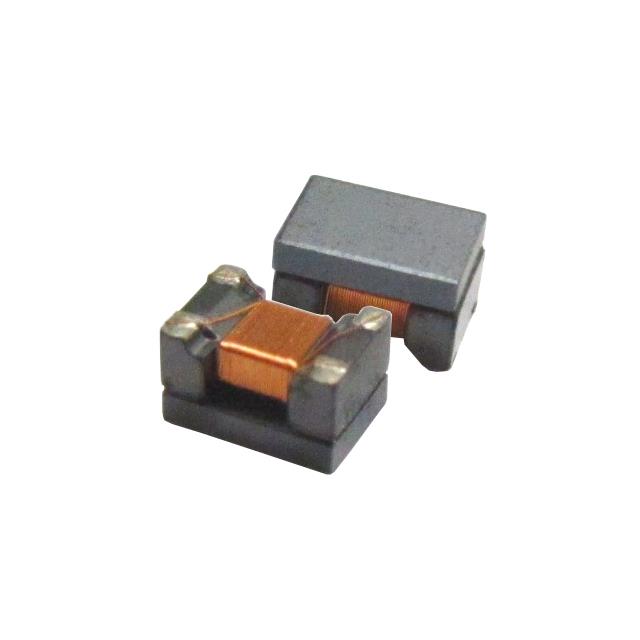
The AWCU00201212900M02 is a surface-mount common mode choke from Pulse Electronics, designed for automotive applications. It features a ferrite core and operates within a temperature range of -40°C to +150°C. The component has a maximum DC current rating of 330 mA and a maximum DC resistance of 0.35 Ohms. Impedance is specified at 90 Ohms with a tolerance of 20% at a test frequency of 100 MHz. The physical dimensions are 2.05 mm x 1.25 mm x 1.2 mm, corresponding to the 0805 [2012 Metric] package.
Verify the specific manufacturing date code and lot traceability upon receipt, as automotive components often require strict quality control documentation. Confirm that the delivered units match the exact AWCU series designation and impedance specifications required by the design schematic. Ensure storage conditions comply with moisture sensitivity levels if applicable, and inspect for physical integrity before soldering to prevent assembly defects.
Select this component when designing for automotive bus lines requiring robust thermal performance beyond standard industrial limits. The 90 Ohm impedance at 100 MHz provides targeted attenuation for high-frequency noise while maintaining low DC resistance to minimize signal loss. The 330 mA current rating suits low-power data transmission lines. Consider the 0805 footprint constraints during layout planning to ensure adequate clearance for adjacent components.
This part belongs to the AWCU series of common mode chokes manufactured by Pulse Electronics. The series is characterized by its suitability for automotive-grade applications, offering reliable noise suppression in harsh electromagnetic environments. The AWCU line typically utilizes ferrite cores and supports various impedance values tailored for different bus protocols and data rates found in modern vehicle electronics architectures.
Direct substitutes include BWCU00201212900M02, which shares identical electrical parameters including 90 Ohm impedance and 330 mA rating but may differ in operating temperature range or packaging details. Verify mechanical compatibility and thermal ratings before swapping.
 AWCU00201212900M02
The activity of extra discounts on wholesale prices is in full swing…
Please fill in your contact information and we will send you the latest wholesale price list.