 ChipApex | Global Electronic Components Supplier
SEARCH
Search Product
Search Post
— IC芯片 | 连接器 | 传感器 | 被动器件 —
Search productSearch post
— IC芯片 | 连接器 | 传感器 | 被动器件 —
Consult the customer manager about the wholesale price.
consultation hotline:86-132-6715-2157
email:[email protected]
Contact the product manager for consultation. One-stop consultation is available.
Do you want a lower wholesale price? Please send us your inquiry and we will reply immediately.
The AWSCR-4.00CPLB-C30-T4 is a surface-mount ceramic resonator manufactured by Abracon LLC, designed for precise clock signal generation in electronic circuits. Operating at a nominal frequency of 4 MHz, this component integrates a built-in load capacitance of 30 pF to simplify circuit design and reduce external component requirements. It features a frequency tolerance of ±0.5% and a stability of ±0.4%, ensuring reliable performance across various applications. The device operates within an extended temperature range of -40°C to +125°C and exhibits a typical impedance of 30 Ohms. Packaged in a compact 3-SMD non-standard footprint measuring 6.00mm x 3.00mm x 1.80mm, it supports standard SMT assembly processes.
Verify that the specific part number matches the required frequency, capacitance, and impedance specifications before integration. Confirm compliance with RoHS directives and REACH regulations for the target market. Ensure PCB layout adheres to the recommended pad dimensions for the 3-SMD package to guarantee proper soldering and mechanical stability during reflow processes.
Select this component when a cost-effective, space-saving solution is needed for low-to-medium precision timing applications. It serves as a direct replacement for quartz crystals requiring external load capacitors, reducing bill-of-materials complexity. Suitable for designs where ±0.5% frequency tolerance is acceptable and operating temperatures fall within the specified industrial range.
This component belongs to the AWSCR-CPLB series of ceramic resonators from Abracon LLC. The series is characterized by its built-in capacitor architecture, which simplifies design and improves reliability compared to traditional crystal oscillator setups. These devices are widely used in general-purpose electronics where moderate frequency stability is sufficient.
AWSCR-4.00CPLA-C30-T4 (Note: Verify impedance differences; CPLA typically specifies 100 Ohms while CPLB specifies 30 Ohms). Cross-referencing requires confirmation of circuit drive level compatibility due to impedance variations.
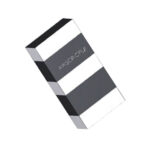 AWSCR-4.00CPLB-C30-T4
The activity of extra discounts on wholesale prices is in full swing…
Please fill in your contact information and we will send you the latest wholesale price list.





