 ChipApex | Global Electronic Components Supplier
SEARCH
Search Product
Search Post
— IC芯片 | 连接器 | 传感器 | 被动器件 —
Search productSearch post
— IC芯片 | 连接器 | 传感器 | 被动器件 —
Consult the customer manager about the wholesale price.
consultation hotline:86-132-6715-2157
email:[email protected]
Contact the product manager for consultation. One-stop consultation is available.
Do you want a lower wholesale price? Please send us your inquiry and we will reply immediately.
The AZ23C47-7 is a dual surface mount Zener diode array manufactured by Diodes Incorporated. It features two Zener diodes in a common anode configuration housed in an SOT-23 package. The nominal Zener voltage is 47 V with a range of 44 V to 50 V at a test current of 5.0 mA. Maximum power dissipation is rated at 300 mW, and the maximum Zener impedance (ZZT) is 100 Ω at IZT = 5.0 mA. The device operates within a temperature range of -65°C to +150°C and exhibits a typical temperature coefficient of +0.110 %/°C.
Verify component authenticity through authorized distribution channels or direct manufacturer engagement. Confirm that the specific part number matches the required electrical characteristics and packaging format. Ensure compliance with relevant environmental regulations and quality standards applicable to the intended end-use environment before finalizing procurement decisions.
Select this component when a dual-channel voltage reference or clamp is required in a compact SOT-23 footprint. Consider the positive temperature coefficient and specific impedance values for precision requirements. Evaluate thermal management needs against the 300 mW dissipation limit and ambient operating conditions to ensure reliable performance over the specified temperature range.
This component belongs to the AZ23C series of dual Zener arrays produced by Diodes Incorporated. The series offers various voltage options ranging from 2.7 V to 51 V, all sharing the same physical package and general electrical architecture. The AZ23C47-7 specifically addresses applications needing a 47 V breakdown characteristic within this standardized lineup.
The DZ23C47-7 serves as a functional alternative, offering identical electrical specifications but configured with a common cathode arrangement instead of common anode. Verify pinout compatibility and circuit topology requirements before substituting between these polarity variants.
The maximum Zener impedance (ZZT) is 100 Ω when measured at a test current of 5.0 mA.
Yes, the device is qualified to AEC-Q101 standards and meets specific ESD sensitivity ratings suitable for automotive environments.
The typical temperature coefficient is +0.110 %/°C.
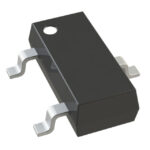 AZ23C47-7
The activity of extra discounts on wholesale prices is in full swing…
Please fill in your contact information and we will send you the latest wholesale price list.




