 ChipApex | Global Electronic Components Supplier
SEARCH
Search Product
Search Post
— IC芯片 | 连接器 | 传感器 | 被动器件 —
Search productSearch post
— IC芯片 | 连接器 | 传感器 | 被动器件 —
Consult the customer manager about the wholesale price.
consultation hotline:86-132-6715-2157
email:[email protected]
Contact the product manager for consultation. One-stop consultation is available.
Do you want a lower wholesale price? Please send us your inquiry and we will reply immediately.
The B39921B3728U410 is a Surface Acoustic Wave (SAW) filter manufactured by Qualcomm Technologies, designed for RF front-end applications. It operates at a center frequency of 915MHz with a bandwidth of 26MHz and insertion loss of 2.2dB. The component is housed in a compact 6-SMD, no-lead package measuring 3.00mm x 3.00mm x 1.10mm maximum height. It meets AEC-Q200 qualification standards and complies with RoHS3 specifications. This discrete filter supports remote control systems requiring reliable signal filtering in small form factor designs.
Verify the specific datasheet version to confirm exact electrical parameters, as specifications may vary between revisions. Confirm that the 6-SMD package dimensions align with your PCB footprint requirements. Ensure compatibility with your assembly process regarding moisture sensitivity level and reflow profiles. Check for any recent product change notices that might affect material composition or manufacturing location. Validate that the AEC-Q200 qualification meets your system's reliability standards.
Select this component when a 915MHz SAW filter is required for remote control or similar ISM band applications. Consider its 2.2dB insertion loss and 26MHz bandwidth against system link budget requirements. Evaluate the 6-SMD package size for space-constrained designs. Compare against alternative filters if different bandwidth or loss characteristics are needed. Ensure the manufacturer's supply chain stability meets production volume needs.
This part belongs to Qualcomm's extensive portfolio of RF front-end filters, which includes ultraBAW, ultraSAW, and TC-SAW technologies. These solutions target 5G/4G, Wi-Fi, GNSS, and IoT connectivity challenges. The B39921 series specifically addresses discrete filtering needs for multimode and multiband devices, supporting energy-efficient designs in consumer and industrial sectors.
The B39921B3726U410 is listed as a similar replacement option. Verify electrical parameter equivalence before substitution. Ensure mechanical footprint compatibility for direct board replacement. Review any functional differences in bandwidth or insertion loss that might impact system performance.
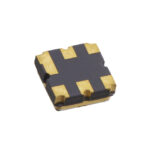 B39921B3728U410
The activity of extra discounts on wholesale prices is in full swing…
Please fill in your contact information and we will send you the latest wholesale price list.





