 ChipApex | Global Electronic Components Supplier
SEARCH
Search Product
Search Post
— IC芯片 | 连接器 | 传感器 | 被动器件 —
Search productSearch post
— IC芯片 | 连接器 | 传感器 | 被动器件 —
Consult the customer manager about the wholesale price.
consultation hotline:86-132-6715-2157
email:[email protected]
Contact the product manager for consultation. One-stop consultation is available.
Do you want a lower wholesale price? Please send us your inquiry and we will reply immediately.
The B57234S0259M000 is a negative temperature coefficient (NTC) thermistor designed for inrush current limiting applications. Manufactured by EPCOS (TDK), this component features a radial leaded disk package suitable for through-hole mounting. It exhibits a nominal resistance of 2.5 ohms with a tolerance of ±20% at the rated temperature of 25 °C. The device supports a maximum steady-state current of 8.4 A and operates within a voltage range of 110 VAC to 230 VAC. It functions reliably across an operating temperature range from -55 °C to +170 °C, ensuring effective protection against electrical surges in power supply circuits.
Verify the specific part number suffix to ensure compatibility with required current ratings and physical dimensions. Confirm that the selected variant meets the voltage and temperature specifications of the target application. Cross-reference manufacturer documentation to validate compliance with relevant safety standards and RoHS directives before integration into final products.
Select this component based on the peak inrush current requirements of the load and the available space for through-hole mounting. Ensure the steady-state current rating exceeds the normal operating current to prevent overheating. Consider the thermal environment and mounting orientation to maintain reliable performance throughout the operational lifespan of the equipment.
This component belongs to the B57234 series of inrush current limiters produced by EPCOS, now part of the TDK Group. The series offers various resistance values and current ratings tailored for different power levels. These thermistors are widely utilized in global electronics manufacturing to enhance reliability and extend the service life of power-sensitive devices.
Compatible substitutes include other NTC inrush limiters with matching 2.5 ohm resistance and 8.4 A current ratings. Verify that alternative parts offer equivalent B-constants and physical footprint dimensions to ensure seamless replacement without redesigning the printed circuit board layout.
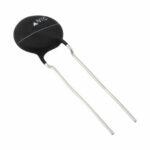 B57234S0259M000
The activity of extra discounts on wholesale prices is in full swing…
Please fill in your contact information and we will send you the latest wholesale price list.





