 ChipApex | Global Electronic Components Supplier
SEARCH
Search Product
Search Post
— IC芯片 | 连接器 | 传感器 | 被动器件 —
Search productSearch post
— IC芯片 | 连接器 | 传感器 | 被动器件 —
Consult the customer manager about the wholesale price.
consultation hotline:86-132-6715-2157
email:[email protected]
Contact the product manager for consultation. One-stop consultation is available.
Do you want a lower wholesale price? Please send us your inquiry and we will reply immediately.
The B5973D is a step-down monolithic switching regulator from STMicroelectronics, designed for high-efficiency power conversion. It delivers up to 2 A DC output current with an internal switch peak current limit of 2.5 A. The device operates with an input voltage range of 4 V to 36 V and supports adjustable output voltages from 1.235 V to 35 V. It features a fixed internal switching frequency of 250 kHz, which minimizes external LC filter requirements. The regulator utilizes a P-channel D-MOS transistor as the switching element, eliminating the need for bootstrap capacitors and enabling 100% duty cycle operation. It is housed in an HSOP-8 package with an exposed pad for enhanced thermal performance.
Verify the specific suffix (e.g., TR) for packaging configuration when ordering. Confirm RoHS compliance status and automotive qualification if required by your application standards. Ensure the HSOP-8 package with exposed pad is compatible with your PCB thermal design constraints. Cross-reference datasheet revisions to confirm feature consistency across production batches.
Select this component for applications requiring a simple buck converter solution with high efficiency and minimal external component count. The 2 A continuous current rating suits moderate power loads. Consider the 250 kHz fixed frequency for EMI management or use the sync pin if higher frequencies are needed. Evaluate thermal dissipation needs based on the HSOP-8 package's thermal resistance characteristics.
The B5973D belongs to the L5973 family of step-down regulators. It shares core architecture with the L5973D but may differ in qualification levels or specific manufacturing variants. This series is widely used in general-purpose power management where reliability and ease of implementation are prioritized. It serves as a cost-effective alternative to discrete MOSFET-based solutions.
Direct substitutes include the L5973D and A5973D013TR. Verify pinout compatibility and thermal performance equivalence before substitution. Check for differences in automotive qualification (AEC-Q100) if applicable to your system requirements.
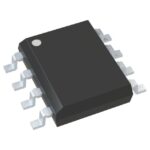 B5973D
The activity of extra discounts on wholesale prices is in full swing…
Please fill in your contact information and we will send you the latest wholesale price list.





