ChipApex | Global Electronic Components Supplier
SEARCH
Search Product
Search Post
— IC芯片 | 连接器 | 传感器 | 被动器件 —
Search productSearch post
— IC芯片 | 连接器 | 传感器 | 被动器件 —
Consult the customer manager about the wholesale price.
consultation hotline:86-132-6715-2157
email:[email protected]
Contact the product manager for consultation. One-stop consultation is available.
Do you want a lower wholesale price? Please send us your inquiry and we will reply immediately.
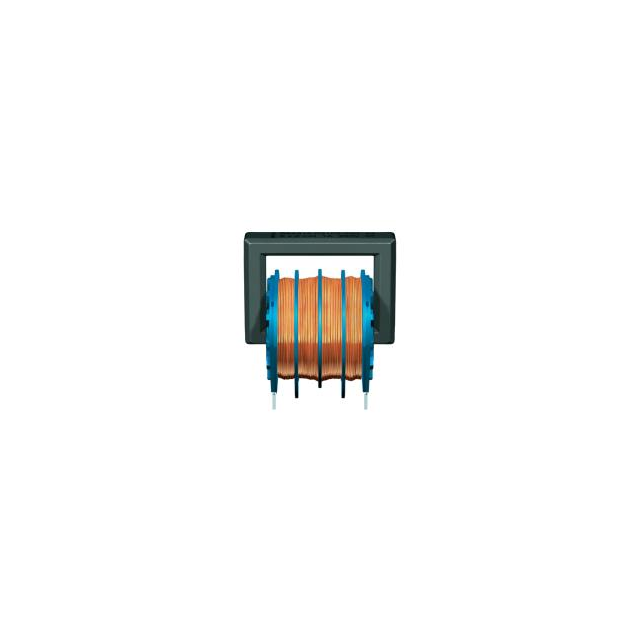
The B82614R2102A030 is a power line choke from the B82614 series, manufactured by EPCOS (TDK). It features an air-gapped rectangular ferrite core and a closed polycarbonate coil former rated UL 94 V-0. The component has a rated voltage of 250 V AC and a rated current range of 0.8 to 2.7 A. Its rated inductance spans 0.5 to 3.0 mH. Construction includes a 4-section winding for high resonance frequency and low saturation effects. It is designed without encapsulation, making it recyclable and suitable for wave soldering.
Verify the specific part number suffix against official TDK/EPCOS documentation to confirm exact electrical parameters such as inductance tolerance and DC resistance. Ensure the selected variant matches the required rated current and voltage for the target application. Confirm RoHS compatibility and lead material specifications if required by the assembly process. Cross-reference ordering codes with the latest datasheet revisions to avoid discrepancies in packaging or terminal configurations.
Select this component based on its suitability for sine-wave chokes in power line applications. Consider the air-gapped core characteristics for managing saturation in current pump circuits. Evaluate the 4-section winding benefits for minimizing parasitic capacitance and increasing resonance frequency. Verify that the polycarbonate former and lack of encapsulation meet thermal and mechanical requirements for wave soldering processes.
This component belongs to the B82614 series of power line chokes and sine-wave chokes. The series covers rated currents from 0.8 A to 2.7 A and inductances from 0.5 mH to 3.0 mH at a rated voltage of 250 V AC. These chokes are engineered for efficiency and reliability in electromagnetic interference suppression within switch-mode power systems.
Consult official TDK/EPCOS substitution guides for verified alternative part numbers within the B82614 series or compatible families. Ensure any substitute maintains identical core material, winding structure, and dimensional constraints for PCB mounting.
 B82614R2102A030
The activity of extra discounts on wholesale prices is in full swing…
Please fill in your contact information and we will send you the latest wholesale price list.