ChipApex | Global Electronic Components Supplier
SEARCH
Search Product
Search Post
— IC芯片 | 连接器 | 传感器 | 被动器件 —
Search productSearch post
— IC芯片 | 连接器 | 传感器 | 被动器件 —
Consult the customer manager about the wholesale price.
consultation hotline:86-132-6715-2157
email:[email protected]
Contact the product manager for consultation. One-stop consultation is available.
Do you want a lower wholesale price? Please send us your inquiry and we will reply immediately.
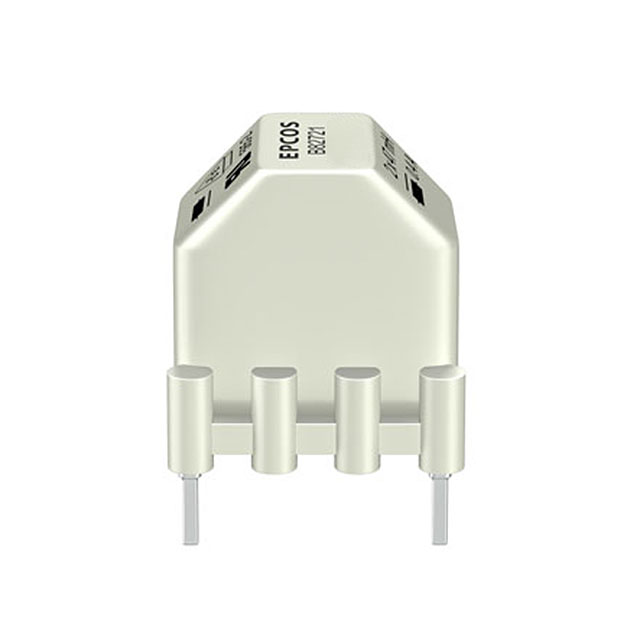
The B82721K2152N001 is a current-compensated ring core double choke designed for power line applications. It features an inductance of 3.3 mH with a tolerance of 30%. The component supports a maximum AC voltage rating of 250 V and withstands 1.5 kVAC. It handles a maximum DC current of 1.5 A with a typical DC resistance of 180 mOhm. Operating temperatures range from -40°C to +125°C. Physical dimensions are 18.2 mm length, 13.2 mm width, and 20.3 mm height. It utilizes radial through-hole mounting.
Verify the specific ordering suffix against official TDK/EPCOS documentation to confirm exact electrical characteristics and approval status. Ensure the selected variant matches the required AC voltage rating and current handling capabilities for the target application. Confirm RoHS compatibility and specific agency approvals such as ENEC or UR if mandated by regional regulations. Cross-reference physical dimensions to ensure fit within the intended chassis or PCB layout constraints.
Select this component when designing power lines requiring effective common-mode noise reduction with high current compensation. The low stray inductance makes it suitable for applications demanding symmetrical interference suppression. Verify that the 1.5 A current rating and 250 V AC voltage limits align with system operational parameters. Consider the radial through-hole package for robust mechanical mounting in industrial or consumer electronics environments.
This component belongs to the B82721 series of current-compensated ring core double chokes manufactured by EPCOS, now part of TDK Electronics. These chokes are engineered for power line filtering, offering high inductance values with minimal differential mode inductance. The series is widely used in global markets due to its compliance with international safety standards and suitability for automated assembly processes like wave soldering.
Consult official TDK cross-reference lists for direct replacements. Ensure substitute parts maintain identical inductance, current ratings, and physical footprint. Verify that alternative components hold equivalent UL and VDE approvals for the specific application region.
 B82721K2152N001
The activity of extra discounts on wholesale prices is in full swing…
Please fill in your contact information and we will send you the latest wholesale price list.