ChipApex | Global Electronic Components Supplier
SEARCH
Search Product
Search Post
— IC芯片 | 连接器 | 传感器 | 被动器件 —
Search productSearch post
— IC芯片 | 连接器 | 传感器 | 被动器件 —
Consult the customer manager about the wholesale price.
consultation hotline:86-132-6715-2157
email:[email protected]
Contact the product manager for consultation. One-stop consultation is available.
Do you want a lower wholesale price? Please send us your inquiry and we will reply immediately.
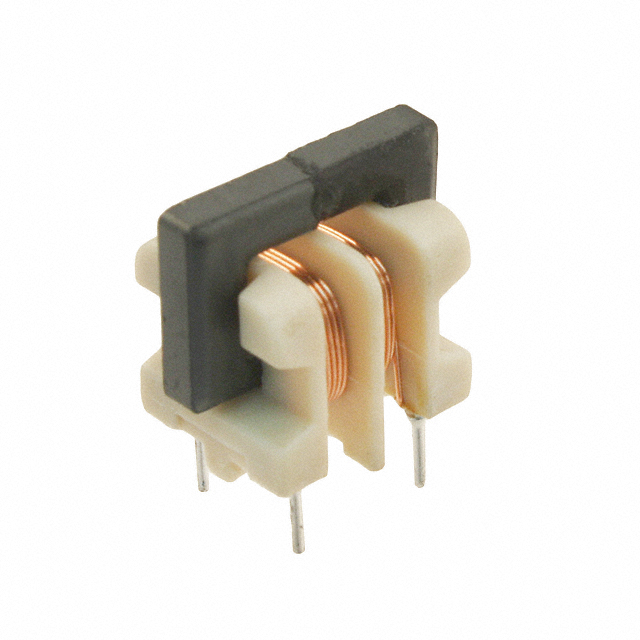
The B82730U3751A020 is a current-compensated U-core double choke from the EPCOS B82730U series, manufactured by TDK. Designed for power line applications, this component provides electromagnetic interference suppression with a rated inductance of 3.9 mH at 10 kHz and a maximum DC resistance of 700 mOhm. It supports a rated AC voltage of 300 V and operates within a temperature range of -40°C to +125°C. The device utilizes a vertical through-hole mounting configuration with dimensions of 16.50 mm in length, 11.00 mm in width, and a maximum height of 16.50 mm.
Verify the specific part number suffix against official TDK documentation to confirm mechanical orientation and tolerance specifications. Ensure compatibility with existing board layouts regarding vertical mounting height and lead spacing. Cross-reference datasheet parameters such as inductance tolerance and saturation current to validate suitability for the target circuit requirements before finalizing procurement orders.
Select this component when high-current compensation and robust thermal performance are required for power line chokes. The vertical form factor suits applications with limited board space but sufficient height clearance. Consider the 300 V AC rating and 3.9 mH inductance for standard EMI suppression tasks in environments demanding reliability across wide temperature ranges.
This component belongs to the B82730U series of current-compensated U-core double chokes produced by EPCOS, now integrated into TDK Electronics. The series offers various inductance values and current ratings tailored for power line filtering. These components are engineered for use in automotive, industrial, and consumer electronics markets where compact size and high efficiency are critical design constraints.
Consult official TDK substitution guides for verified alternatives within the B82730U family or compatible series. Verify that any substitute matches the 3.9 mH inductance, 700 mOhm DCR, and vertical mounting dimensions to ensure mechanical and electrical compatibility without redesigning the PCB footprint.
 B82730U3751A020
The activity of extra discounts on wholesale prices is in full swing…
Please fill in your contact information and we will send you the latest wholesale price list.