ChipApex | Global Electronic Components Supplier
SEARCH
Search Product
Search Post
— IC芯片 | 连接器 | 传感器 | 被动器件 —
Search productSearch post
— IC芯片 | 连接器 | 传感器 | 被动器件 —
Consult the customer manager about the wholesale price.
consultation hotline:86-132-6715-2157
email:[email protected]
Contact the product manager for consultation. One-stop consultation is available.
Do you want a lower wholesale price? Please send us your inquiry and we will reply immediately.
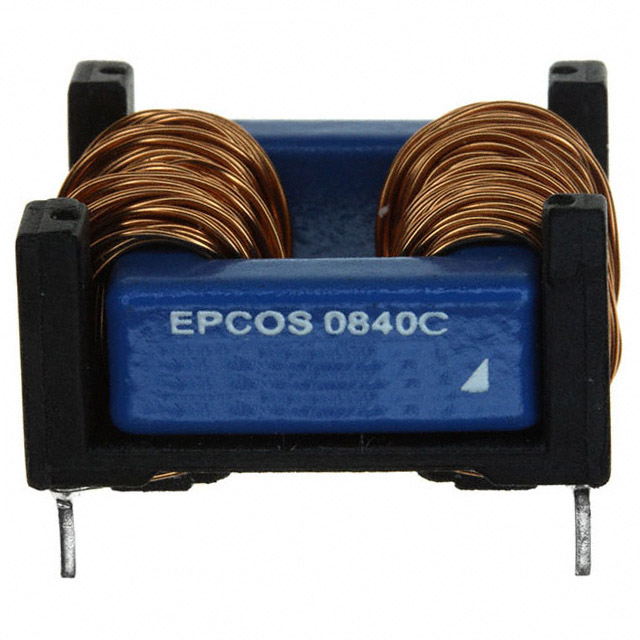
The B82732F2451B001 is a current-compensated frame core double choke designed for single-phase EMI suppression in AC power lines. It operates at rated voltages of 250 V AC (50/60 Hz) with a maximum rated current of 450 mA. The component provides a rated inductance of 100 mH and features a typical DC resistance of 2.93 Ohms. Constructed for through-hole mounting, it measures 24.5 mm x 14.5 mm x 13.5 mm. The device supports an operating temperature range from -40 °C to +125 °C, including self-temperature rise.
Verify the complete part number suffix to confirm specific inductance and current ratings, as the B82732F series encompasses multiple variants. Ensure the selected component matches the required 250 V AC rating and 450 mA current capacity for the target circuit. Confirm through-hole package compatibility with the printed circuit board layout. Check RoHS compliance status if required by regional regulations.
Select this component when high inductance is required for effective common mode noise attenuation in single-phase applications. The low stray inductance makes it suitable for circuits requiring symmetrical interference suppression. Consider the 450 mA current limit and thermal performance within the -40 °C to +125 °C range during design integration. Verify that the physical dimensions fit the available PCB space.
This component belongs to the B82732F series of current-compensated frame core double chokes manufactured by EPCOS, now part of the TDK Group. These chokes are engineered for power line applications where compact size and high performance are necessary. The series utilizes a frame core construction to achieve high inductance values while maintaining low resistance characteristics.
Direct substitutes within the same series include B82732F2101B001 (10 mH) and B82732F2601B001 (60 mH), provided their electrical ratings match the application requirements. Cross-referencing datasheets is essential to ensure equivalent inductance, current handling, and physical dimensions before substitution.
 B82732F2451B001
The activity of extra discounts on wholesale prices is in full swing…
Please fill in your contact information and we will send you the latest wholesale price list.