ChipApex | Global Electronic Components Supplier

SEARCH
Search Product
Search Post
— IC芯片 | 连接器 | 传感器 | 被动器件 —
Search productSearch post
— IC芯片 | 连接器 | 传感器 | 被动器件 —
Consult the customer manager about the wholesale price.
consultation hotline:86-132-6715-2157
email:[email protected]
Contact the product manager for consultation. One-stop consultation is available.
Do you want a lower wholesale price? Please send us your inquiry and we will reply immediately.
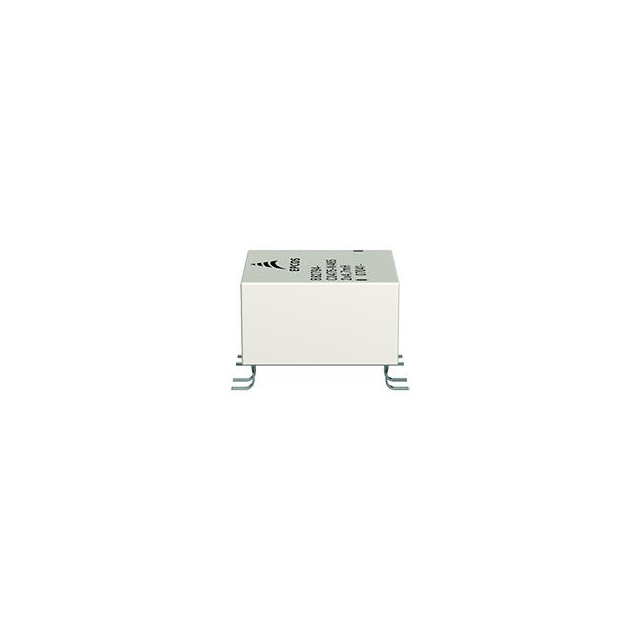
The B82794C0686N465 is a shielded axial lead inductor from the EPCOS B82794 series, designed for high-frequency applications. It features a ferrite core and a copper wire winding, providing an inductance of 68 µH with a tolerance of ±10%. The component is rated for a maximum DC resistance of 3.5 Ω and can handle a rated current of 150 mA. Operating within a temperature range of -40°C to +125°C, it utilizes a RoHS-compliant tin-plated termination finish suitable for standard surface mount and through-hole assembly processes.
Verify the specific suffix codes against the manufacturer's latest datasheet to confirm exact electrical tolerances and packaging formats. Ensure that the requested quantity matches the available reel or tape-and-reel specifications provided by authorized distributors. Cross-reference the date code and lot number to guarantee compliance with current environmental directives and material declarations.
Select this component based on its specific inductance value and current handling capabilities required for the target circuit design. Consider the physical dimensions and lead spacing to ensure compatibility with the printed circuit board layout constraints. Evaluate the thermal performance characteristics relative to the expected operating environment and ambient temperature conditions.
This part belongs to the B82794 series of shielded axial inductors manufactured by EPCOS, now part of TDK Electronics. The series is engineered for robust performance in demanding electronic environments, offering consistent inductance values across various frequency ranges. These components are widely utilized in industrial and automotive sectors where reliability and compact form factors are critical.
Consult official substitution lists for equivalent parts with matching inductance, tolerance, and physical footprint. Verify that alternative components meet the same current rating and saturation characteristics to maintain circuit integrity without redesigning the surrounding passive network elements.
 B82794C0686N465

The activity of extra discounts on wholesale prices is in full swing…
Please fill in your contact information and we will send you the latest wholesale price list.