ChipApex | Global Electronic Components Supplier
SEARCH
Search Product
Search Post
— IC芯片 | 连接器 | 传感器 | 被动器件 —
Search productSearch post
— IC芯片 | 连接器 | 传感器 | 被动器件 —
Consult the customer manager about the wholesale price.
consultation hotline:86-132-6715-2157
email:[email protected]
Contact the product manager for consultation. One-stop consultation is available.
Do you want a lower wholesale price? Please send us your inquiry and we will reply immediately.
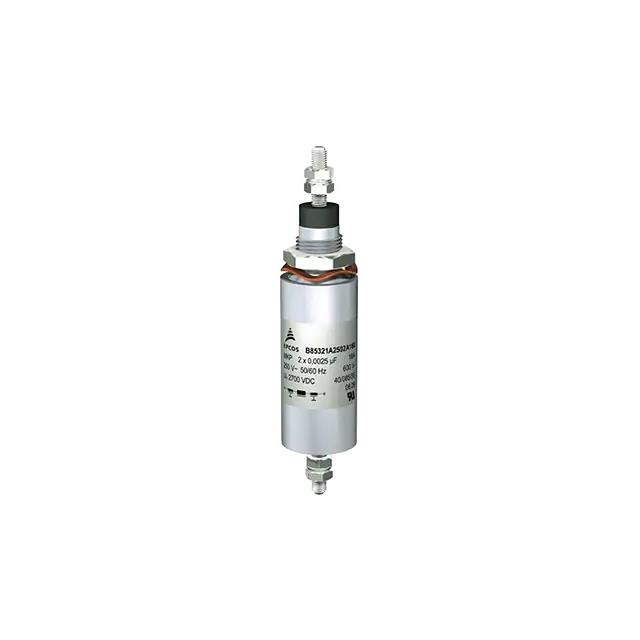
The B85321A2105A501 is a common mode choke from the EPCOS B85321 series, designed for electromagnetic interference suppression in data transmission lines. It features a toroidal core construction with dual windings optimized for high impedance at noise frequencies while maintaining signal integrity. The component is engineered for robust performance in automotive and industrial communication applications, providing effective differential mode rejection. Key electrical characteristics include a nominal inductance of 1 mH measured at 1 kHz and a rated current capacity suitable for standard bus line operations. The device utilizes a leaded package configuration to facilitate through-hole mounting on printed circuit boards.
Verify the complete part number against manufacturer datasheets to ensure correct tolerance and temperature rating specifications. Confirm that the lead form and terminal plating meet your assembly requirements. Cross-reference the manufacturing date code if long-term storage stability is critical for your production timeline. Ensure compatibility with your automated placement equipment regarding component height and footprint dimensions.
Select this component when common mode noise attenuation is required for low-speed serial communication protocols. Evaluate the operating temperature range to ensure it aligns with your environmental conditions. Consider the physical size constraints of your PCB layout relative to the toroidal package dimensions. Verify that the DC resistance does not introduce excessive voltage drop in your specific circuit application.
This component belongs to the EPCOS B85321 series of common mode chokes, widely utilized in automotive electronics for bus line filtering. The series is characterized by its compact toroidal geometry and reliable performance under varying thermal conditions. These components are integral to meeting electromagnetic compatibility standards in vehicle networks and industrial control systems where signal integrity is paramount.
Consult official substitution lists for equivalent inductance and current ratings. Verify pinout compatibility before replacing existing assemblies. Ensure mechanical fitment matches the original board layout constraints.
 B85321A2105A501
The activity of extra discounts on wholesale prices is in full swing…
Please fill in your contact information and we will send you the latest wholesale price list.