ChipApex | Global Electronic Components Supplier
SEARCH
Search Product
Search Post
— IC芯片 | 连接器 | 传感器 | 被动器件 —
Search productSearch post
— IC芯片 | 连接器 | 传感器 | 被动器件 —
Consult the customer manager about the wholesale price.
consultation hotline:86-132-6715-2157
email:[email protected]
Contact the product manager for consultation. One-stop consultation is available.
Do you want a lower wholesale price? Please send us your inquiry and we will reply immediately.
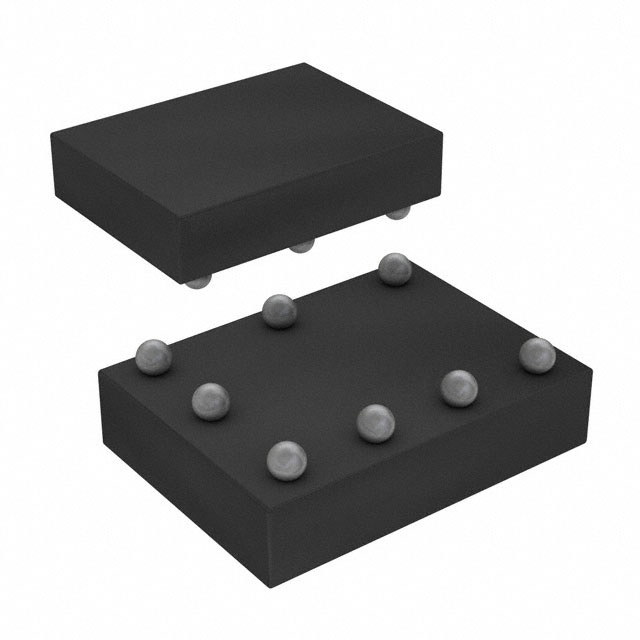
The BALF-112X-01D3 is an ultra-miniature RF balun manufactured by STMicroelectronics, designed for sub-GHz ISM band applications. It operates within a frequency range of 868MHz to 928MHz and provides a 50/50 Ohm impedance transformation between unbalanced and balanced ports. The component integrates both a matching network and harmonics filter to optimize signal integrity. Key electrical specifications include a maximum insertion loss of 2.3dB and a minimum return loss of 8dB. It is housed in an 8-UFBGA package suitable for surface mount installation.
This component is officially listed as obsolete by the manufacturer. Availability is limited to existing stock, and no new production units are being manufactured. Procurement should focus on verifying the authenticity of remaining inventory from authorized distributors. Designers planning long-term production must account for the end-of-life status and initiate replacement strategies immediately to ensure supply chain continuity.
Select this component only for designs targeting the 868MHz to 928MHz frequency range that require specific integration with CC1120 or CC1125 transceivers. The integrated harmonic filter and matching network reduce external component count but limit flexibility for other impedance requirements. Due to its obsolete status, alternative solutions with similar electrical characteristics and available supply chains should be prioritized for new product development.
The BALF-112X-01D3 belongs to STMicroelectronics' BALF series of ultra-miniature baluns. This family typically combines balancing functions with impedance matching and filtering in a compact footprint. The specific model is tailored for Texas Instruments' CC112x series transceivers, offering a turnkey solution for sub-GHz wireless applications where space constraints and signal purity are critical design factors.
Public confirmed substitute part numbers are not available in the provided documentation. As the component is obsolete, engineers must evaluate third-party equivalents or redesign the RF front-end using currently active components that meet the 868-928MHz specification and required impedance matching.
 BALF-112X-01D3
The activity of extra discounts on wholesale prices is in full swing…
Please fill in your contact information and we will send you the latest wholesale price list.