 ChipApex | Global Electronic Components Supplier
SEARCH
Search Product
Search Post
— IC芯片 | 连接器 | 传感器 | 被动器件 —
Search productSearch post
— IC芯片 | 连接器 | 传感器 | 被动器件 —
Consult the customer manager about the wholesale price.
consultation hotline:86-132-6715-2157
email:[email protected]
Contact the product manager for consultation. One-stop consultation is available.
Do you want a lower wholesale price? Please send us your inquiry and we will reply immediately.
The BAT54CD REG is a surface-mount Schottky barrier diode array manufactured by Taiwan Semiconductor Corporation. It features four isolated diodes configured in two common-cathode banks, housed in a compact SOT-363 (SC-88) package. The device supports a maximum average forward current of 200 mA and a peak repetitive reverse voltage of 30 V. Key electrical characteristics include a low forward voltage drop of approximately 1 V at 100 mA and a fast switching speed with a reverse recovery time of 5 ns. It operates within a junction temperature range of -65°C to +150°C.
Verify the specific suffix 'REG' against the official Taiwan Semiconductor datasheet to confirm packaging details and marking codes. Ensure the selected variant matches the required SOT-363 footprint and pinout configuration for your PCB layout. Cross-reference the part number with authorized distributors to confirm availability and authenticity before procurement.
Select this component when a compact solution for multiple Schottky diodes is required in space-constrained designs. The dual common-cathode arrangement simplifies routing compared to discrete components. Consider the 30 V reverse voltage rating and 200 mA current limit to ensure adequate headroom for the target application's electrical requirements.
This component belongs to the BAT54 series of surface-mount Schottky diodes from Taiwan Semiconductor. The series offers various configurations including single, dual, and quad arrays in packages like SOT-23 and SOT-363. The BAT54CD variant specifically provides four isolated diodes, enhancing design flexibility for complex rectification or logic applications while maintaining low profile and high reliability standards.
BAT54CDW
The BAT54CD contains four isolated Schottky diodes arranged in two common-cathode banks within a single SOT-363 package.
The maximum repetitive peak reverse voltage (Vrrm) is rated at 30 V.
Yes, it features a very fast reverse recovery time of 5 ns, making it suitable for high-speed switching and signal processing tasks.
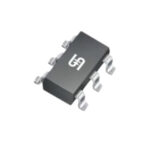 BAT54CD REG
The activity of extra discounts on wholesale prices is in full swing…
Please fill in your contact information and we will send you the latest wholesale price list.





